
A 4-year-old is at an important stage when your child begins to discover their abilities and develop new skills more quickly. Therefore, focusing on developing skills for a 4-year-old child helps build a strong foundation for learning, independence, and self-confidence. Through age-appropriate educational activities, your child can develop thinking, concentration, communication, and creativity skills in an enjoyable way, away from traditional learning methods.
At this stage, children do not need pressure or excessive homework. Instead, they need a learning experience that combines play, learning, and interaction, giving them the opportunity to experiment, ask questions, and discover things independently. By choosing activities and programs that suit their abilities and interests, you can help them acquire new skills that will benefit them in their studies and daily life.
If you are looking for a way to help your child make the most of this important stage, Genius Online offers educational programs and activities designed to help children learn and develop their abilities through interactive experiences suitable for their age, allowing your child to begin their skill-development journey step by step.
Best Courses for 4-Year-Old Children with Genius Online
If your child is 4 years old, choosing the right course for their age can help them learn in a way that matches their abilities and stage of development. Genius Online offers educational programs that children can begin at this age, focusing on gradual learning, interaction, and practice rather than content that requires advanced skills.
| Course | Age | Why Is It Suitable for Your Child? |
|---|---|---|
| Noorani Qaida Course | 4 to 7 years | It helps children build a foundation in Arabic reading, recognize letters, and pronounce them correctly, then gradually move on to vowels, elongations, and other skills that prepare them to read the Quran correctly. |
| Al-Qari Al-Muthaqqaf Course | 4 to 16 years | It gives children the opportunity to begin learning Quran recitation from an early age, with gradual reading and recitation practice suited to their level. This helps them build a strong foundation in Quran reading and improve their performance through continued practice. |
Which Course Should You Choose for Your 4-Year-Old?
If your child needs to build reading and pronunciation skills from the beginning, the Noorani Qaida Course is the closest match to the needs of this stage because it starts with the basics and gradually helps children recognize letters and develop reading skills.
If your main goal is for your child to begin learning Quran recitation and practicing it from an early age, you can choose the Quran Recitation Course, especially since the program is available for children starting at age 4.
Why Is It Important to Choose a Course Suitable for the Child’s Age?
At age 4, children are at a foundational stage that requires an approach based on interaction, repetition, and age-appropriate activities rather than intensive content or advanced skills. Therefore, Genius Online recommends choosing programs according to the child’s age and abilities, progressing gradually and avoiding more difficult levels before the child has mastered the basics.
Teaching children at this stage can also begin with simple and interactive activities that help them recognize letters, sounds, and basic skills, while using short, frequent sessions and encouraging the child rather than putting pressure on them.
Start Teaching Your 4-Year-Old with Genius Online
You can start your child with the program that best matches their level and your educational goal, whether it is building reading skills through the Noorani Qaida or learning Quran recitation. As the child progresses, they can move on to other programs and skills when they are ready based on their age and abilities.
Learn more about: Learn Tajweed for Beginners from Scratch in an easy way
Start your child’s learning journey from age 4 with an age-appropriate program that matches their abilities with Genius Online, and help them develop new skills through an interactive and gradual learning experience.
Essential Skills a 4-Year-Old Child Needs

A 4-year-old is at an important stage in the development of their personality and abilities. At this age, children begin acquiring new skills that help them communicate, learn, and become more independent. Therefore, your role as a parent is not limited to monitoring what your child learns but also includes providing suitable opportunities to develop their skills through play, activities, and everyday experiences.
1. Communication and Language Skills
At age 4, children begin developing their ability to express their thoughts and needs, ask questions, and listen to others. You can support this development through regular conversations, reading stories to them, and encouraging them to describe what they see or feel.
2. Focus and Attention Skills
Children need to develop their ability to concentrate for periods appropriate for their age. This can be encouraged through games based on observation and memory, stories, and activities that require following simple steps.
3. Thinking and Problem-Solving Skills
Activities that give children the opportunity to experiment and discover solutions can help develop logical thinking and problem-solving skills. Simple puzzles, construction games, building blocks, and everyday situations can encourage children to think independently.
4. Social Skills
At this stage, children begin learning how to interact with other children, share, wait, take turns, and express their feelings. Group games and interactive activities help develop these skills naturally.
5. Fine Motor Skills
Children develop better control of their hands and fingers through drawing, coloring, cutting, gluing, and assembling toys. These activities also help prepare them for writing and using different tools.
6. Gross Motor Skills
Children need activities that help them develop balance and coordination, such as running, jumping, playing with a ball, and other age-appropriate physical activities.
7. Independence and Self-Reliance
Encourage your child to complete some daily tasks independently, such as putting away their toys, choosing their clothes, organizing their belongings, eating, and using utensils appropriately for their age.
8. Creativity and Imagination
Children at this age are highly imaginative and curious, so it is useful to provide activities such as drawing, storytelling, role-playing, and games that allow them to create ideas, characters, and stories from their imagination.
9. Cognitive Skills
You can gradually help your child recognize colors, shapes, numbers, letters, and simple concepts through play and interactive activities without turning learning into pressure or lengthy homework.
10. Learning and Exploration Skills
One of the most important skills a 4-year-old needs is a love of learning and curiosity. Encourage your child to ask questions, experiment, and discover the things around them, making learning an enjoyable part of their day.
How Can You Help Your Child Develop Their Skills at Age 4?
The best approach is to combine play, learning, and interaction while choosing activities that match the child’s age and interests. Activities can include reading, storytelling, drawing, educational games, and physical activities, in addition to educational programs suitable for children at this stage.
Developing Your Child’s Skills with Genius Online
You can benefit from educational programs suitable for your child’s age to help them develop their skills gradually and interactively. Genius Online offers programs for children that help them learn, discover their interests, and develop their abilities, with programs selected according to the child’s age and level.
Learn more about: How to Teach Programming? Best Methods and Steps for Beginners
Help your child develop the essential skills for age 4 through learning, play, and age-appropriate activities, and begin a journey of discovering their abilities with Genius Online.
Activities to Develop a Child’s Intelligence
If you are looking for activities to develop your child’s intelligence in an enjoyable and beneficial way, it is important to choose games and experiences that encourage your child to think and explore rather than relying only on memorization. Children learn best when they are having fun and actively participating in an activity, so simple daily activities can be a great opportunity to develop thinking, concentration, creativity, and problem-solving skills.
1. Puzzles and Assembly Games
Puzzles, building blocks, and picture-assembly games encourage children to think about the relationship between different parts and how to reach the final shape. They can also support observation, concentration, and coordination skills.
2. Memory and Matching Games
Picture cards and games based on matching similar items can be used as children try to remember where pictures are located and find the matching pairs. This makes the activity an enjoyable way to practice attention and memory.
3. Reading and Storytelling
Reading stories is a useful activity for developing language, imagination, and comprehension. After reading the story, you can ask your child simple questions such as: What happened? Why did the character do that? What do you think will happen next?
4. Sorting and Sequencing Games
Ask your child to sort toys or objects by color, size, or shape, or arrange them from smallest to largest. These activities help introduce children to comparison, patterns, and relationships between objects.
5. Drawing and Coloring
Drawing and coloring give children an opportunity to express their ideas freely while helping them use their imagination and develop fine motor skills. Encourage your child to draw a story or character from their imagination rather than simply asking them to copy a specific picture.
6. Building Games and Blocks
Building blocks and construction games can encourage children to plan, experiment, and discover how to create the shape they want. They also give them the opportunity to try different solutions when building a house, tower, or new shape.
7. Question-Based Activities
Encourage your child to think by asking simple questions such as: What would happen if…? How can we solve this problem? Where can we find this? This approach helps develop curiosity and encourages children to search for answers.
8. Number and Simple Math Games
Numbers can be introduced into everyday play by counting toys, fruits, or other objects and arranging items according to quantity. This approach helps children become familiar with basic mathematical concepts naturally and enjoyably.
9. Physical Games
Developing a child’s intelligence is not limited to mental activities. Physical games that require balance, coordination, and following instructions can help children develop a range of skills while playing.
10. Simple Science Experiments
You can conduct safe and simple experiments at home, such as observing how ice melts or discovering which objects float or sink in water. The goal is to encourage children to observe, make predictions, ask questions, and discover results.
11. Age-Appropriate Coding Games for Children
When children reach the appropriate age, they can be introduced to coding games and activities based on arranging commands and solving problems visually and simply. These activities help develop logical and algorithmic thinking without starting directly with complex code.
12. Learning Activities Through Stories and Games
More than one skill can be combined in a single activity, such as choosing a short story and then asking the child to arrange its events, draw their favorite character, or create a different ending. In this way, the activity becomes an opportunity to develop memory, language, imagination, and thinking at the same time.
How Do You Choose Activities That Suit Your Child?
Choosing an activity is not based on how difficult it is, but on how well it matches the child’s age, interests, and abilities. Start with simple activities, give your child the opportunity to experiment and make mistakes, and focus on encouraging them and asking questions instead of immediately giving them the answer.
Developing Your Child’s Intelligence with Genius Online
You can also support your child’s learning through educational programs suitable for their age and interests. Genius Online offers a range of programs that help children learn, interact, and acquire new skills, with the ability to choose an educational path that suits the child’s developmental stage and abilities.
Learn more about: Computer Languages for Kids from programming basics to artificial intelligence
Start today with simple activities that help your child develop thinking, concentration, creativity, and problem-solving skills, and make every experience a new opportunity for learning and discovery with Genius Online.
Educational Games for 4-Year-Old Children
If you are looking for educational games for 4-year-old children that help your child learn without getting bored, choosing the right games for this stage can be an effective way to develop their skills through play and experimentation. Children at this age learn best when they actively participate, discover solutions, and enjoy the activity rather than relying only on explanations and memorization.
1. Jigsaw Puzzle Games
Age-appropriate puzzles help develop concentration, observation, thinking, and problem-solving. You can start with a small number of pieces and gradually increase the difficulty as your child’s skills develop.
2. Building Blocks and Construction Games
Blocks give children the opportunity to build different shapes such as towers, houses, and cars. This helps them use their imagination, plan, and try different ways to create the shape they want.
3. Color and Shape Matching Games
Cards or games that ask children to match similar colors and shapes can be used to develop visual discrimination, attention, and memory.
4. Memory Games
Memory games require children to remember the locations of pictures or matching items. They help children practice concentration and memory in an enjoyable and interactive way.
5. Letter and Word Games
Educational games can help children recognize letters and connect them with their corresponding sounds, words, or pictures. The game should preferably be simple and interactive so children can enjoy learning.
6. Number and Counting Games
Counting games and activities that match numbers with quantities introduce children to early mathematical concepts in a practical way, such as counting blocks, arranging numbers, or comparing two groups of objects.
7. Interactive Story Games
Picture books and interactive stories can help develop language, comprehension, and imagination. After the story, you can ask your child about the characters and events or ask them to predict the ending.
8. Drawing and Coloring Games
Drawing and coloring are enjoyable activities that help children express their ideas and develop imagination and fine motor skills, especially when using pencils and colors appropriate for their age.
9. Problem-Solving Games
Choose games that present children with a simple problem that requires thinking to solve, such as arranging shapes, finding the right piece, or identifying the correct path. These games help develop logical thinking and independence.
10. Movement and Coordination Games
Physical games can also be educational, especially when they require children to follow instructions or remember a specific sequence of movements. They help develop coordination, balance, and attention at the same time.
How Do You Choose Educational Games for a 4-Year-Old?
Make sure to choose games that match the child’s age, abilities, and interests, starting with simple games and gradually increasing the difficulty. It is also preferable to provide a variety of mental, physical, and creative games and avoid forcing your child to continue an activity they have lost interest in.
Educational Programs for 4-Year-Old Children with Genius Online
In addition to games and home activities, you can support your child’s learning through educational programs suitable for their age. Genius Online offers programs that children can begin at age 4, such as the Noorani Qaida Course and the Quran Recitation Course, helping parents choose an educational experience that suits their child’s developmental stage and needs.
Learn more about: Programming and Artificial Intelligence for Kids: Future Skills Step by Step
Make learning more enjoyable for your child through educational games suitable for 4-year-olds, and support their skills through learning and experimentation with Genius Online.
Developing Communication Skills in Children
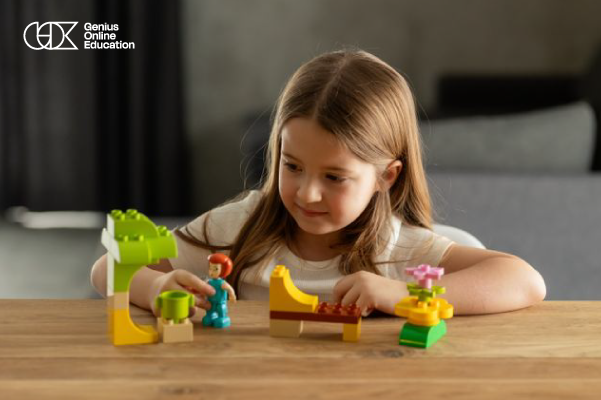
Developing communication skills in children is one of the most important aspects that helps them build healthy relationships and express their thoughts and feelings confidently. The more opportunities children have to talk, listen, and interact with those around them, the more capable they become of expressing their needs and understanding others. Parents can support these skills through daily conversations, stories, games, and activities that encourage children to participate.
1. Talk to Your Child Regularly
Set aside time every day to talk with your child about their day, toys, and the things they enjoy. Ask open-ended questions that encourage them to answer with sentences and details rather than short answers such as yes or no.
2. Listen to Your Child
Communication is not only about speaking. Children also need to learn how to listen to others. When your child is talking to you, give them your full attention, avoid interrupting, and encourage them to continue expressing their thoughts.
3. Read Stories with Your Child
Reading stories helps develop vocabulary, comprehension, and the ability to retell events. After finishing a story, you can ask your child about the characters and what happened, or ask them to imagine a different ending.
4. Encourage Your Child to Express Their Feelings
Help your child name and talk about their feelings, such as happiness, sadness, anger, or fear. This makes them more capable of expressing their needs instead of relying on crying or angry behavior to communicate them.
5. Use Interactive Games
Group games and role-playing activities give children opportunities to talk, negotiate, and take turns. For example, playing the roles of a doctor, teacher, or shopkeeper allows children to practice using words, expressing themselves, and interacting with others.
6. Teach Your Child to Wait and Take Turns
Sharing games help children understand the importance of waiting for their turn and listening to others. These skills are an important part of social communication, especially when children participate in group activities.
7. Expand Your Child’s Vocabulary
Use new words while talking with your child, explain their meanings in a simple way, and encourage them to use the words in a sentence. Stories and everyday situations can naturally introduce new vocabulary into a child’s language.
8. Encourage Your Child to Ask Questions
Do not treat your child’s questions as an annoyance. Instead, use them as an opportunity for learning and conversation. You can also ask questions that encourage your child to think, express an opinion, and explain what they see.
9. Develop Communication Through Group Activities
Group activities give children opportunities to interact with other children, cooperate with them, and share ideas, helping develop conversation, cooperation, and understanding of others’ feelings.
10. Be a Role Model for Communication
Children learn a great deal by observing their parents. Therefore, use clear and kind words, listen to others, and express feelings calmly so your child can acquire these behaviors through daily practice.
Developing Communication Skills with Genius Online
You can support your child’s communication skills by combining everyday activities with interactive educational experiences suitable for their age. Genius Online offers educational programs that help children learn, participate, and interact, allowing parents to choose a program that matches their child’s age, interests, and educational needs.
Learn more about: Learn Programming Online at the Best Price in 2026
Help your child develop communication, expression, and listening skills through conversations, stories, and interactive activities, and make every learning experience a new opportunity for growth and learning with Genius Online.
The Role of the Family in Developing a Child’s Skills
Developing a child’s skills begins at home, where the family represents the first environment in which children learn how to communicate, think, express their feelings, and interact with others. It does not always require complex activities or many tools. Daily conversations, play, reading stories, and encouraging children to experiment can make a significant difference in their skill development.
1. Provide an Environment That Encourages Learning
Providing a safe and supportive home environment helps children explore and ask questions without fear of making mistakes. Encourage your child to try new things and give them enough time to discover their interests and abilities.
2. Talk and Listen to Your Child
Children need to feel that their ideas matter. Therefore, make sure to talk with them and listen attentively. Regular conversations can help develop language, communication, and expression skills.
3. Encourage Your Child to Be Independent
Give your child age-appropriate opportunities to complete some tasks independently, such as putting away toys, choosing clothes, or organizing belongings. This helps build self-confidence, responsibility, and the ability to make simple decisions.
4. Learn Through Play
Play is one of the best ways families can use to develop a child’s skills. Games based on building, sorting, solving problems, and imagination can help develop concentration, thinking, creativity, and problem-solving in an enjoyable way.
5. Read Stories to Your Child
Make reading stories part of your child’s daily routine, then discuss the story’s events and characters with them. This habit helps develop vocabulary, comprehension, and imagination while encouraging children to ask questions and express their opinions.
6. Discover Your Child’s Talents and Interests
Observe the things your child enjoys. They may be interested in drawing, reading, numbers, physical activities, or technology. Discovering these interests helps guide them toward activities and educational programs that match their abilities.
7. Encourage Your Child Instead of Focusing on Mistakes
Children need encouragement to keep trying. When they make a mistake, help them understand it and try another approach instead of frustrating them or comparing them with others. Focusing on progress and effort can strengthen their self-confidence.
8. Set Aside Time for Family Activities
Shared activities can combine fun and learning, such as brain games, puzzles, drawing, simple cooking, and activities that require cooperation. They also give children an opportunity to communicate with family members and learn new social skills.
9. Organize Your Child’s Time
Having a balanced daily routine helps children understand when it is time to play, learn, sleep, and rest. It is important not to overcrowd their schedule with activities, as children also need free time to play and explore.
10. Choose Appropriate Educational Programs
Families can support children’s skills by choosing educational courses suitable for their age and level, providing an experience that combines learning, interaction, and practical application. It is preferable to choose programs that match their interests rather than forcing them to learn a field they do not enjoy.
Developing Your Child’s Skills with Genius Online
Parents can be essential partners in their child’s learning journey by following their interests and choosing appropriate programs. Genius Online offers a variety of educational programs for children in different fields, allowing families to choose a learning path that helps their child develop skills and discover their abilities step by step.
Learn more about: Learning Python from Scratch at the best price in 2026
Start at home with simple steps that help develop your child’s skills, and make the family an essential partner in the learning and discovery journey with Genius Online.
How Do Courses Help Develop a Child?

Choosing the right courses for children can be an important step in helping your child discover their abilities and develop skills from an early age. Structured learning is not limited to acquiring information. It gives children opportunities to experiment, practice, and interact while helping them develop skills they need in school and everyday life. When the right program is selected according to their age and interests, courses can become an enjoyable and beneficial learning experience rather than simply additional lessons.
1. Discovering the Child’s Interests
Courses give children the opportunity to explore different fields such as programming, languages, reading, Quran studies, and design, helping them discover the things they enjoy and may want to develop further over time.
2. Developing Thinking and Problem-Solving Skills
Many educational programs rely on activities and practical applications that encourage children to think and search for solutions. This helps develop logical thinking and problem-solving skills rather than relying only on memorization.
3. Improving Concentration and Attention
Educational sessions and interactive activities help children listen, follow instructions, and complete tasks step by step, giving them opportunities to practice concentration and attention in a way appropriate for their age.
4. Building Self-Confidence
When a child learns a new skill and manages to complete a project, read a text, or solve a problem independently, they experience a sense of achievement. These small experiences can help build self-confidence and encourage them to try new learning experiences.
5. Developing Communication Skills
Interactive courses give children opportunities to talk, ask questions, express their ideas, and interact with teachers or classmates, helping improve communication, listening, and teamwork skills.
6. Encouraging Creativity and Innovation
When children participate in activities based on drawing, design, programming, or project creation, they have the opportunity to turn their ideas into tangible results. This helps them use imagination and creativity rather than simply receiving information.
7. Developing Self-Learning Skills
Over time, children learn how to search for information, understand instructions, and try solutions independently. These skills help make children more independent learners, especially when they receive appropriate guidance from teachers and family members.
8. Developing Digital Skills
Technology courses suitable for children can help them use technology in more beneficial ways, such as learning programming, designing games and websites, or using digital tools creatively instead of using technology only for entertainment.
9. Promoting Practical Learning
Good courses connect knowledge with practical application. When children apply what they learn through a project or activity, they become better able to understand, remember, and use information in different situations.
10. Preparing Children for Future Skills
Early learning of appropriate skills helps children build a foundation that can be developed as they grow. By choosing fields that match their interests, children can gradually begin acquiring skills such as logical thinking, creativity, communication, and technology.
How Do You Choose the Right Course for Your Child?
Choosing the best course does not depend only on the popularity of the field. You should consider the child’s age, level, interests, and preferred learning style. It is also preferable to choose programs based on interaction and practical application that give children opportunities to participate rather than relying solely on long lectures.
Developing Your Child’s Skills with Genius Online
Genius Online offers a variety of educational programs that help children learn, discover their interests, and develop their skills in different fields. Parents can choose the appropriate program according to their child’s age and abilities, whether they are interested in programming, languages, reading, or other educational areas.
Learn more about: Ideas for Developing Children’s Skills — Best Activities and Methods with Genius Online
Give your child the opportunity to discover their abilities and develop their skills through educational courses suitable for their age and interests with Genius Online.