
Learning Python from scratch has become one of the best ways to help children develop programming and logical thinking skills from an early age, especially since Python features simple syntax and easy-to-learn fundamentals. With gradual training and practical application, children can move from understanding basic programming concepts to writing code and confidently creating their own projects.
Through Genius Online, children learn Python through an interactive and simplified approach suitable for their age and skill level, with a focus on practice rather than memorization. This type of learning helps develop creativity, problem-solving, and analytical thinking while enabling children to turn their ideas into real programming projects.
Start your child’s journey of learning Python from scratch and give them the opportunity to discover the world of programming and develop technical skills that can help prepare them for a digital future full of opportunities.
What Is Python for Kids?
Python: The Advanced Step is one of the best programming languages for children to start with, thanks to its simple syntax and easy-to-read code compared with many other programming languages. Learning Python is not limited to writing code; it also helps children develop logical thinking, solve problems, and turn their ideas into practical projects and programs.
Through Genius Online, children learn the fundamentals of Python gradually and interactively in a way that is suitable for beginners, with a focus on practical application and project-based learning. This makes programming an enjoyable experience that helps children develop technical skills they will need in the future.
💻 Start your child’s journey of learning Python for kids with Genius Online and help them develop programming and logical thinking skills in a simple and enjoyable way.
How to Choose the Best Python Course for Kids?

Choosing the best Python course for kids does not depend only on the course name, but also on how suitable it is for the child’s age and skill level and how the content is delivered. Therefore, it is important to choose a program that starts with the fundamentals, relies on practical application and projects, and gives children the opportunity to progress in learning programming without unnecessary complexity. Genius Online offers programming paths that start with basic principles and then progress to Python and advanced levels.
1. Choose a Course Suitable for the Child’s Age and Skill Level
You should start with the level that matches the child’s experience. If they have no previous programming experience, it is best to begin with a beginner Python course to learn the fundamentals before moving directly into writing Python code. Genius Online offers a Programming Principles Course for children aged 7 to 11, while children can move on to Python after establishing a strong foundation in programming concepts.
2. Make Sure the Course Starts from Scratch
Python for Beginners is an ideal choice for beginners when it explains programming concepts gradually, such as variables, conditions, loops, and functions, rather than assuming that the child already has prior programming knowledge.
3. Choose Practical, Application-Based Learning
It is not enough for children to learn Python rules theoretically. Practical application helps them understand how to use code to build programs and projects. Genius Online emphasizes a methodology based on practical application and real projects rather than theoretical memorization alone.
4. Look for Practical Projects
It is important for the course to include exercises and projects that children can complete independently. Building a project helps them apply programming concepts, identify errors, and develop their problem-solving abilities.
5. Make Sure There Is an Instructor to Guide the Child
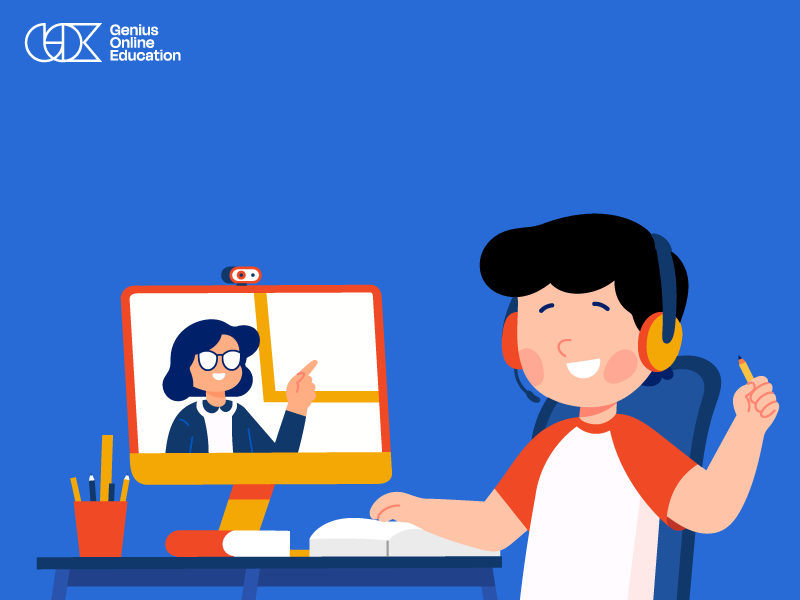
Having an instructor who helps children understand concepts, answer their questions, and correct their mistakes makes the learning journey more effective. Genius Online relies on live interactive classes and limited-size groups to ensure meaningful interaction with students.
6. Choose a Learning Path That Allows Progression Beyond the First Level
Learning should not stop at the basics of Python. Ideally, there should be a learning path that allows children to progress to more advanced levels. Alongside Python for Beginners, Genius Online offers courses such as Python: The Advanced Step and Data Analysis Using Python.
7. Make the Child’s Interests Part of the Choice
If your child enjoys games and digital projects, choose a learning path based on projects that encourages creativity and experimentation. If they are interested in data analysis or artificial intelligence, they can explore these fields further after mastering the fundamentals of Python.
📌 Conclusion
The best Python course for kids is one that suits the child’s age and skill level, starts with the fundamentals, focuses on practical application and projects, provides instructor support, and allows progression to more advanced levels. In this way, Python becomes a real starting point for developing a child’s programming skills rather than simply learning how to write code.
💻 Start your child’s journey with Genius Online and choose the right programming path to learn Python step by step, from the fundamentals to practical projects.
Why Should Kids Learn Python?
Learning Python for kids is an excellent way to introduce children to the world of programming in a simple and gradual manner, especially since Python features clear syntax that helps beginners understand programming without unnecessary complexity. Through practical learning, children can develop their cognitive skills and turn their ideas into real programs and projects.
🧠 Developing Logical Thinking
Python helps children organize their thoughts, analyze problems, and break them down into clear steps to reach the appropriate solution.
💡 Enhancing Creativity and Innovation
Children can use programming to create their own ideas and projects, encouraging them to innovate and experiment with new solutions.
🧩 Developing Problem-Solving Skills
While writing code, children encounter challenges and errors that require analysis and experimentation. This teaches them how to identify and solve problems in an organized way.
💻 Learning an Easy Programming Language for Beginners
Python is known for its simple syntax and easy-to-read code, allowing children to understand basic programming concepts and progress gradually.
🚀 Gaining Technical Skills for the Future
Python is used in many technology fields, including application development, data analysis, and artificial intelligence, giving children a strong foundation for exploring these areas in the future.
🎯 Learning Through Projects
Completing practical projects helps children apply what they have learned instead of relying only on theory, while also giving them a sense of achievement and confidence in their abilities.
📌 Building a Strong Programming Foundation
Learning Python at an early age helps children understand fundamental programming concepts that they can benefit from when moving on to more advanced languages and technologies.
Learn more about: Ideas for Developing Children’s Skills — Best Activities and Methods with Genius Online
💻 Start your child’s journey with Genius Online and let them learn Python for kids through an interactive approach that helps develop their thinking, creativity, and programming skills.
Benefits of Teaching Python to Kids
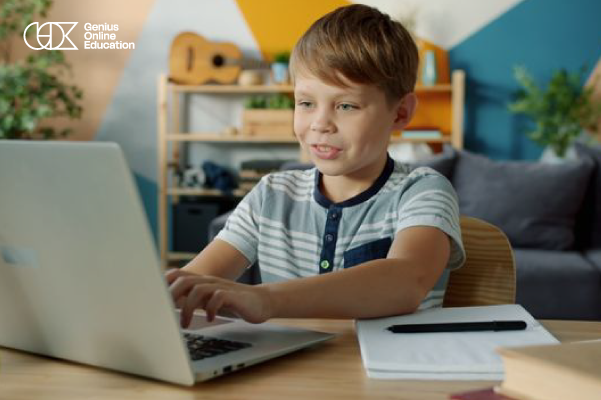
Teaching Python to kids is not limited to introducing them to a new programming language. It provides children with a strong foundation for understanding how programs and applications are built. Python helps present programming concepts gradually, making it suitable for children who want to move from simply using technology to learning how to develop it.
💻 Understanding Programming Fundamentals
In the Coding with Python Level 1 course, children learn fundamental concepts such as variables, data types, programming commands, and how instructions are executed within a program.
🔄 Using Programming Loops
Children learn how to repeat commands using loops, helping them write more efficient code instead of repeating instructions manually.
🔀 Understanding Conditional Statements
Children learn how to use conditions to make programs take different decisions based on the data or situations they encounter.
🧩 Creating Functions
Children learn how to divide programs into organized sections using functions, helping them write code that is more structured and easier to develop.
🐞 Identifying and Fixing Programming Errors
Children learn how to read programming errors, identify the cause of a problem, and test suitable solutions until the program works as intended.
🧠 Applying Algorithms
Learning Python helps children understand how to transform a problem into a series of logical steps that a program can execute to reach a solution.
🛠️ Building Real Programming Projects
Children can apply the concepts they learn by creating practical programs and projects, turning programming knowledge into an applicable skill.
🚀 Preparing to Learn Advanced Programming Fields
Learning Python provides a suitable foundation for later exploring fields such as application development, web development, data analysis, artificial intelligence, and machine learning.
Learn more about: Summer Courses for Kids — Make the Most of the Vacation with Genius Online
💻 Start teaching Python to your child with Genius Online and help them build a strong programming foundation through learning and practical application.
Steps to Learn Python from Scratch with Genius Online
Learning Python from scratch requires a clear plan that starts with the fundamentals and gradually progresses to writing code and building projects. With Genius Online, children can learn programming through an organized and interactive approach that helps them understand concepts and apply them practically.
1. Learn the Basics of Programming
Children begin by understanding what programming is and how programming instructions work. They then become familiar with the Python environment and learn how to write and run code.
2. Learn Variables and Data Types
Children learn about variables and how to store information within a program, along with basic data types such as strings, numbers, and Boolean values.
3. Use Programming Operations
Children learn how to perform mathematical and logical operations and work with data to execute different commands within programs.
4. Learn Conditional Statements
Children practice using if and else to make programs take different decisions according to data and inputs.
5. Use Loops
Children learn how to use for and while loops to repeat programming instructions in an organized way, helping them write more efficient code.
6. Learn About Functions
Children learn how to create and use functions to divide code into organized sections that can be reused within a program.
7. Work with Lists and Data
Children learn different ways to store and organize collections of data using lists and other essential Python tools.
8. Identify and Fix Programming Errors
Children learn how to read programming errors, trace their causes, and test appropriate solutions until they produce working code.
9. Apply What They Learn Through Practical Projects
Children move from simple exercises to projects that allow them to apply the programming concepts they have learned and turn their ideas into real programs.
10. Progress to More Advanced Levels
After mastering the fundamentals, children can develop their Python skills and explore different programming fields, such as application development, data analysis, and artificial intelligence.
📌 Why Genius Online?
Genius Online helps children learn programming gradually by combining explanation with practical application. This means they do not simply memorize code; they understand how to use it and build projects with it.
Learn more: A Guide to Choosing Courses for Kids Based on Your Child’s Age
💻 Start your Python learning journey from scratch with Genius Online and let your child build a strong programming foundation through interactive learning and practical projects.
Easy Python Projects for Beginners
Easy Python projects for beginners help children turn the programming concepts they have learned into simple practical applications, making Python more enjoyable and useful. Children can start with small projects suitable for their skill level and gradually develop them as they gain more programming experience.
🧮 1. Simple Calculator
Children can create a program that accepts two numbers and allows users to perform basic mathematical operations such as addition, subtraction, multiplication, and division. This helps them apply variables, mathematical operations, and conditional statements.
🎯 2. Number Guessing Game
Children can create a game in which the program selects a random number and the user tries to guess it. Messages can indicate whether the number is higher or lower than the guess, allowing children to practice loops and conditions.
❓ 3. Quiz Game
Children can design a program that displays a series of questions and counts the number of correct answers. This helps them practice variables, conditional statements, and user input.
🎲 4. Dice Game
Children can create a program that simulates rolling a dice and selects a random number each time, giving them an opportunity to learn about programming libraries and random numbers.
🔐 5. Password Generator
Children can develop a simple program that generates random passwords using a combination of letters, numbers, and symbols. This helps them understand how to work with text and random selection.
⏱️ 6. Simple Timer
Creating a digital timer helps children understand how to work with time and execute commands sequentially. The project can later be enhanced by adding an interface or notifications.
📋 7. Daily To-Do List
Children can create a program that allows users to add, view, and delete tasks after completing them. This helps them apply lists, functions, and data organization.
💰 8. Expense Calculator
Children can create a simple program for recording expenses and calculating their total, combining programming skills with a practical everyday-life application.
🚀 Gradually Developing Projects
After completing simple projects, children can develop them further by adding graphical interfaces, new levels, scoring systems, and data storage. This helps them progress from beginner projects to more advanced applications.
Learn more about: Training Course Names for Kids 2026
💻 Help your child turn their ideas into real projects with Genius Online and start their Python learning journey through practical application and hands-on practice.
Skills Children Gain from Learning Python
Learning Python for kids is not limited to writing code. It helps children develop a range of programming skills that provide a strong foundation for understanding software and application development. Through training, practice, and project-based learning, children learn how to think like programmers and turn ideas into practical solutions.
💻 Writing Code
Children learn the basics of writing Python code correctly, understanding programming commands, and executing them to create simple programs and projects.
🧩 Using Variables and Data Types
Children develop the ability to store and work with different types of data, such as numbers, strings, and Boolean values, and use them within programs.
🔀 Building Programming Decisions
Children learn to use conditional statements such as if and else to make programs take different decisions based on data and inputs.
🔄 Using Loops
Children learn how to repeat programming commands using loops, helping them write more organized and efficient code.
🛠️ Creating Functions and Organizing Code
Children develop the ability to divide a program into small, organized sections using functions, making code easier to reuse and projects easier to develop.
🐞 Identifying and Fixing Programming Errors
Children learn how to read errors, trace the cause of a problem, and test different solutions until they produce code that works correctly.
🧠 Algorithmic Thinking
Children learn how to turn a problem into a series of logical and organized steps and then translate these steps into instructions that a computer can execute.
🚀 Building Programming Projects
Applying programming concepts through practical projects helps children move from theoretical learning to creating real programs using Python.
🔗 Preparing to Learn Advanced Programming Fields
Learning Python gives children a foundation that can be built upon when studying areas such as application development, web development, data analysis, and artificial intelligence.
📌 Conclusion
Learning Python for kids helps children build a comprehensive set of programming skills, from writing code and understanding algorithms to creating projects, identifying errors, and developing solutions. This gives children a strong foundation for continuing their journey in the world of programming.
💻 Start with Genius Online and help your child develop programming skills through learning Python, practical application, and educational projects.