
Learning programming and artificial intelligence for kids is no longer just an additional skill. It has become a real opportunity that helps children understand the technology around them and participate in shaping the future rather than simply using it. By learning programming, children begin to understand how programs, applications, and games work, while artificial intelligence opens the door to one of the fastest-growing technologies in the world.
With Genius Online, children can explore this educational journey in a gradual and interactive way that suits their age and skill level. They can start with basic programming concepts, then move on to writing code and developing projects, and eventually explore artificial intelligence applications. This learning approach combines knowledge with practical application, helping children turn their ideas into digital projects while discovering their technical and creative abilities.
Programming and artificial intelligence for kids also help develop logical thinking, problem-solving, information analysis, experimentation, and creativity. These are valuable skills that children can benefit from in their education and future lives, regardless of the field they eventually choose.
Start your child’s programming and artificial intelligence journey with Genius Online and help them discover technology, develop their skills, and prepare for a future full of opportunities.
Best Programming and Artificial Intelligence Courses for Kids
Choosing the best programming and artificial intelligence courses for kids requires considering the child’s age, skill level, and interests. The right starting point is to build a strong programming foundation and then gradually move into programming languages and different technology fields. Genius Online offers a range of courses that help children establish a strong foundation in programming before progressing to Python, artificial intelligence, data analysis, and other technical fields. The platform’s programs are based on interactive learning and practical projects.
| Course | What Does It Add to the Child? |
|---|---|
| Programming Principles Course for Kids | A suitable starting point for children aged 7 and above. It helps them understand programming basics, logical thinking, and command sequences through practical activities and projects. |
| Programming Diploma for Kids | A comprehensive learning path for children aged 11 to 18 that helps them progress in programming from the basics to developing practical programming projects. |
| Coding with Python – Level 1 | Helps children learn Python and apply the basics of coding, providing a foundation that can be developed further in more advanced technical fields. |
| Python: The Advanced Step | Suitable for moving from Python basics to more advanced programming concepts and projects. It is one of the courses available through Genius Online. |
| Introduction to Artificial Intelligence | Introduces children to artificial intelligence concepts and how it works, while exploring its applications and building simple prototypes in an interactive way. |
| Data Analysis Using Python | Takes children to a more advanced level of using Python to work with and analyze data and extract useful results and information. |
| Data Structures and Algorithms | Develops computational thinking and helps children understand how to organize data and design more efficient solutions to programming problems. |
| Database (SQL) | Introduces children to the basics of storing, organizing, and managing data, which are important skills for understanding how applications and systems work. |
| JavaScript: Making the Web Alive | Helps children learn JavaScript and use it to add interaction and dynamic elements to web pages and projects. |
| Static Web Pages with HTML5 and CSS3 | Provides children with the basics of creating and styling web pages and prepares them to progress toward more advanced web development. |
| Backend Course Using Node.js | Helps children learn about backend development and understand how to work with servers and data. |
| Software Testing | Introduces children to the basics of software testing, identifying errors, and understanding the importance of software quality. |
How Do You Choose the Right Course for Your Child?
If the child is learning programming for the first time, it is best to start with the Programming Principles Course. Children who already have a programming foundation can move on to Python. After building a suitable foundation, they can explore Introduction to Artificial Intelligence, data analysis, or algorithms according to their skill level and interests. Genius Online offers progressive programs and practical projects that help children apply what they learn instead of relying solely on theory.
Learn more about: Learn Programming Online at the Best Price in 2026
🤖 Start your child’s programming and artificial intelligence journey with Genius Online, and choose the right learning path for their age and skill level to develop technical skills, build projects, and discover the world of technology.
How Can a Child Start Learning Artificial Intelligence?
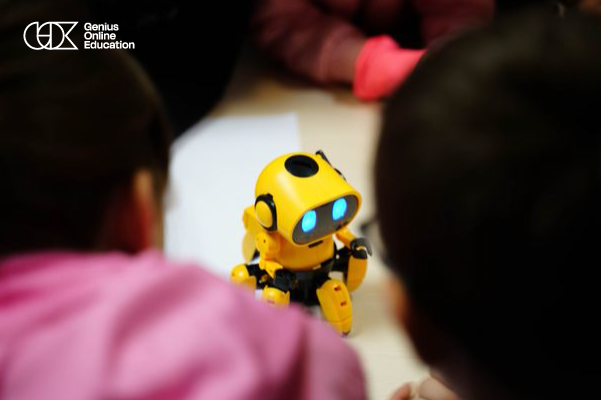
Learning artificial intelligence for kids requires a gradual approach that suits the child’s age and skill level. It is not recommended to move directly into complex concepts. Instead, children should start by understanding the basics of technology and logical thinking, then learn programming and apply it through simple projects before gradually exploring artificial intelligence and its applications.
1. Start by Developing Logical Thinking
Before learning artificial intelligence, children need the ability to organize ideas and understand relationships between causes and effects. This can be developed through educational games, puzzles, and activities based on thinking and analysis.
2. Learn Programming Basics First
Programming helps children understand how to give instructions to a computer and complete tasks in an organized way. Therefore, they can start with programming principles and gradually move on to programming languages suitable for their skill level.
3. Move on to Python
Python can be a suitable choice for children who already have a programming foundation because of its simple syntax and its use across many fields related to artificial intelligence and data analysis.
4. Build Simple Programming Projects
Practical application helps children reinforce the concepts they learn. They can start with small projects and gradually increase the difficulty while being encouraged to modify projects and add their own ideas.
5. Learn the Concept of Artificial Intelligence
After building a suitable programming foundation, artificial intelligence can be explained to children in a simple way, such as introducing them to how data can be used to train systems to recognize patterns and perform specific tasks.
6. Explore Age-Appropriate Artificial Intelligence Applications
Children can explore the use of artificial intelligence in education, content creation, image and sound analysis, and other applications while choosing age-appropriate tools under parental supervision.
7. Learn to Verify Artificial Intelligence Results
It is important for children to understand that artificial intelligence tools may provide inaccurate results. Therefore, they should review information, compare it with reliable sources, and avoid assuming that every answer is automatically correct.
8. Build a Project Combining Programming and Artificial Intelligence
After learning the fundamentals, children can move on to projects that combine programming with selected artificial intelligence applications. This helps them understand the relationship between the two fields and turn what they have learned into practical experience.
9. Learn Gradually and Continuously
Children do not need to learn all artificial intelligence concepts at once. It is better to build skills step by step while increasing the difficulty of projects and challenges as their experience develops.
10. Choose a Suitable Learning Path
Genius Online can help children build a foundation in programming and technology through progressive courses, then develop their skills and move into more advanced fields according to their age, skill level, and interests.
Learn more about: Learning Python from Scratch at the best price in 2026.
🤖 Start your child’s artificial intelligence learning journey from the basics with Genius Online, and help them learn programming and apply what they learn through projects that introduce them to the world of technology.
What Is the Relationship Between Programming and Artificial Intelligence?
Programming and artificial intelligence are closely connected. Programming provides the foundation for building and developing artificial intelligence systems and training them to perform tasks, analyze data, and make decisions according to the rules and models defined by developers. Therefore, understanding programming basics helps children develop a clearer idea of how artificial intelligence technologies work.
Programming Is the Foundation
Artificial intelligence systems rely on programming code that determines how data is processed and how different operations are performed. The more children understand programming basics, the better they can understand how applications and intelligent systems are built.
Artificial Intelligence Uses Programming to Develop Solutions
Developers use programming languages and tools to create artificial intelligence models and develop applications based on them, such as applications that recognize images or text or work with data.
Data Connects the Two Fields
Many artificial intelligence applications rely heavily on data, while programming provides the tools needed to collect, organize, process, and use data within applications and intelligent models.
Learning Programming Makes the Transition to Artificial Intelligence Easier
When children learn programming basics such as variables, conditions, loops, functions, and problem-solving, they build a foundation that can later help them understand more advanced concepts in artificial intelligence and data analysis.
Python Is a Clear Example of the Relationship
Python is widely used in artificial intelligence and data analysis, making it a suitable starting point for children who want to gradually move from learning programming to exploring artificial intelligence technologies.
Programming and Artificial Intelligence Are Complementary Skills
Learning artificial intelligence does not mean that children can do without programming. Understanding programming gives them a better ability to work with different tools and technologies. At the same time, exploring artificial intelligence helps children discover new applications for what they learn in programming.
Therefore, a child’s journey can begin with learning programming principles, followed by Python and practical projects. After building a strong foundation, they can explore artificial intelligence and its applications according to their age and skill level.
Learn more about: Ideas for Developing Children’s Skills — Best Activities and Methods with Genius Online
💻 Help your child discover the relationship between programming and artificial intelligence with Genius Online, and start building technical skills that keep pace with the rapidly evolving world of technology.
Best Programming Languages for Learning Artificial Intelligence
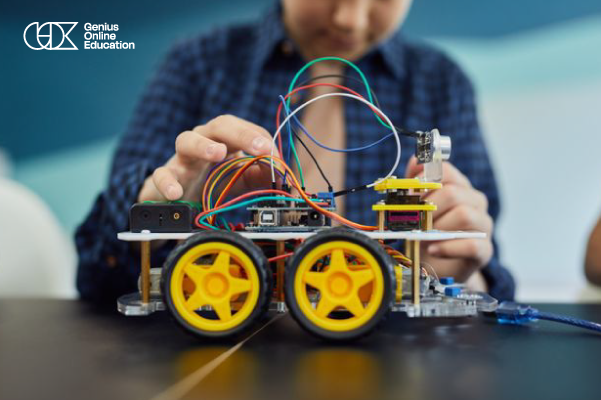
Choosing the best programming languages for learning artificial intelligence depends on the learner’s age, programming level, and learning goals. Some languages are more commonly used to develop artificial intelligence applications, analyze data, and build machine learning models. Therefore, learners can start with an accessible language and gradually progress toward more advanced concepts and technologies.
Python
Python is one of the most popular languages used in artificial intelligence because of its easy-to-write code and the wide range of specialized libraries and tools available for data analysis, machine learning, and deep learning. It is therefore a suitable option for those who want to move from programming fundamentals into artificial intelligence.
R
R is particularly strong in statistics and data analysis. It is used for data processing, analysis, and statistical modeling, making it especially suitable for fields that rely heavily on data.
Java
Java is used to develop many applications and systems and can also be used in certain artificial intelligence and machine learning applications. It is known for handling large-scale projects and providing good performance.
C++
C++ is known for its speed and high performance, making it useful for certain artificial intelligence applications that require efficient and fast processing, particularly in resource-intensive systems.
JavaScript
JavaScript can be used to develop web applications powered by artificial intelligence technologies, making it a suitable option for those who want to combine artificial intelligence with websites and interactive applications.
What Is the Best Language for Children to Learn Artificial Intelligence?
For children and beginners, Python can be a good starting point because of its simple syntax and readable code, especially after learning programming fundamentals and logical thinking. After building a strong foundation, children can gradually explore data analysis and artificial intelligence concepts.
How Can a Child Start Learning Programming and Artificial Intelligence?
It is best for children to begin by learning programming principles and developing computational thinking. They can then move on to Python and practical projects before exploring artificial intelligence concepts and applications according to their age and skill level.
Learn more about: Summer Courses for Kids — Make the Most of the Vacation with Genius Online
Start your child’s programming and artificial intelligence learning journey with Genius Online, and help them build a strong foundation in technology while discovering the fields that match their interests.
Benefits of Learning Programming and Artificial Intelligence for Kids
Learning programming and artificial intelligence for kids helps build a range of technical and cognitive skills that children need to understand and interact with technology in a more informed and creative way. Learning is not limited to writing code or exploring artificial intelligence tools. It also gives children an opportunity to analyze problems, experiment with ideas, design digital projects, and discover the technical fields that match their interests.
1. Understanding Technology Instead of Simply Using It
Children learn how programs, applications, and digital systems work, helping them move from simply using technology to understanding it and developing projects based on it.
2. Developing Logical Thinking
Programming relies on organizing commands and analyzing relationships between steps, while understanding artificial intelligence requires thinking about data and results. This helps children develop a more structured way of thinking.
3. Developing Problem-Solving Skills
Children learn to analyze problems and break them down into smaller parts, then try different solutions, identify errors, and make adjustments until they achieve the desired result.
4. Developing Creativity and Innovation
Programming and artificial intelligence give children tools they can use to turn their ideas into digital projects, such as programs, games, applications, and interactive projects.
5. Learning How to Work with Data
Exploring artificial intelligence helps children understand the importance of data and how it can be collected, organized, analyzed, and used to reach different results and solutions.
6. Gaining Practical Programming Skills
Children learn the basics of writing code and using variables, conditions, loops, and functions. They can then gradually move on to languages such as Python and fields related to artificial intelligence.
7. Encouraging Learning Through Experimentation
This field allows children to experiment with different code and ideas and observe the results, making them more willing to learn from mistakes and improve solutions rather than relying only on memorization.
8. Preparing for Modern Technology Fields
Learning programming and artificial intelligence provides a foundation that children can build on in the future in areas such as application and web development, data analysis, machine learning, robotics, and other technical fields.
9. Increasing Confidence in Building Projects
When children successfully write a program or develop a digital project that works correctly, they gain confidence in their ability to turn an idea into a tangible result, encouraging them to take on new projects and challenges.
10. Discovering Children’s Interests Early
Exploring programming and artificial intelligence helps children discover the fields they enjoy most, whether application development, data analysis, artificial intelligence, web development, or digital projects.
11. Building a Foundation for a Digital Future
Teaching children programming and artificial intelligence does not determine their future career. Instead, it gives them technical knowledge and skills that can be developed over time and applied across many educational and professional fields.
Through Genius Online, children can start with basic programming concepts and gradually progress through programming languages and different technical fields according to their age, skill level, and abilities.
Learn more: A Guide to Choosing Courses for Kids Based on Your Child’s Age
Start your child’s programming and artificial intelligence journey with Genius Online, and help them develop future-ready skills through learning, practical application, and project development.
Skills Children Need to Enter the World of Artificial Intelligence

Before starting learning artificial intelligence, children need a set of basic skills that help them understand modern technologies and use them appropriately. Children do not need advanced experience from the beginning, but building a strong foundation in logical thinking, programming, and data makes them better prepared to progress in this field.
1. Logical Thinking
Children need the ability to organize ideas and connect causes with effects because understanding how intelligent systems work depends on organized thinking and analyzing problem-solving steps.
2. Programming Basics
Learning programming helps children understand how to give instructions to a computer and work with variables, conditions, loops, and functions. These concepts are important when moving into artificial intelligence.
3. Problem-Solving Skills
Artificial intelligence involves dealing with different types of problems, so it is important for children to learn how to analyze a problem, break it into parts, and try multiple approaches to reach a solution.
4. Working with Data
Many artificial intelligence applications rely on data. Therefore, it is useful for children to learn the basics of organizing and reading data and understanding how it can be used to produce useful results.
5. Basic Mathematics
Understanding basic mathematical concepts helps children grasp some of the ideas related to data, algorithms, and models that appear as they progress in learning artificial intelligence.
6. Analytical Thinking
Children need the ability to compare information, identify patterns, and draw conclusions. These skills help them understand how data is analyzed and used in intelligent applications.
7. Curiosity and a Love of Exploration
Artificial intelligence is constantly evolving, so curiosity encourages children to ask questions, experiment with new tools, and discover how different technologies work.
8. Creativity
Creative thinking helps children use artificial intelligence to develop new ideas and projects rather than simply relying on ready-made tools.
9. The Ability to Experiment and Learn from Mistakes
A project or piece of code may not work on the first attempt. Therefore, children need patience and the willingness to try different solutions, analyze errors, and make adjustments until they achieve the desired result.
10. Awareness of Responsible Artificial Intelligence Use
It is important for children to learn how to use artificial intelligence tools responsibly and understand that their results need to be reviewed and verified, while also paying attention to privacy and avoiding sharing personal or sensitive information.
How Can a Child Prepare to Learn Artificial Intelligence?
Children can start by building a foundation in programming principles and logical thinking, then move on to a language such as Python and practical projects. After developing a suitable foundation, they can gradually explore artificial intelligence concepts and applications.
Genius Online helps children build their technical skills through progressive learning paths, allowing them to develop their knowledge of programming and technology before moving into more advanced fields according to their age and skill level.
Learn more about Islamic studies courses for kids to develop faith and good values from an early age.
🤖 Start your child’s programming and artificial intelligence learning journey with Genius Online, and help them build the foundation they need to explore the world of technology with confidence and creativity.
Artificial Intelligence Applications Suitable for Kids
Artificial intelligence for kids can be introduced through simplified educational approaches that help children understand technology and explore its different uses. By choosing age-appropriate tools under parental supervision, children can benefit from artificial intelligence for learning, creativity, critical thinking, and problem-solving.
1. Learning and Study Tools
Artificial intelligence applications can help explain certain educational concepts, simplify information, and create practice questions that allow children to review what they have learned in a more interactive way.
2. Smart Educational Assistants
Some tools allow children to ask questions and receive simplified explanations, helping them research, explore, and understand topics that interest them.
3. Programming Learning Applications
Some artificial intelligence tools can help children understand programming code, identify errors, and suggest different ways to implement a project idea. However, children should understand the code rather than rely on the tool to write everything for them.
4. Creating Stories and Creative Content
Children can use artificial intelligence tools to develop story ideas, characters, and scenarios, encouraging them to write, imagine, and develop ideas creatively.
5. Generating Images and Designs
Some artificial intelligence tools can transform written ideas into images and designs. They can be used for age-appropriate educational and creative projects under parental supervision.
6. Turning Ideas into Projects
Children can use artificial intelligence during the project planning stage to organize ideas, suggest steps, and develop project content, then carry out the work themselves to strengthen their skills.
7. Image and Sound Recognition
Some applications use artificial intelligence to recognize images and sounds. These can be used as educational tools to introduce children to how intelligent systems work with different types of data.
8. Language Learning
Some smart tools can help children practice languages through conversation, vocabulary, sentence-building, and pronunciation exercises, provided that age-appropriate tools are selected.
9. Smart Educational Games
Artificial intelligence technologies can be incorporated into educational games that adapt to a child’s skill level and provide challenges and activities that develop thinking and analytical skills in an enjoyable way.
10. Exploring Robotics and Intelligent Systems
Artificial intelligence concepts can be introduced through robotics projects and interactive systems, helping children connect programming and artificial intelligence with real-world applications.
How Can Children Benefit from Artificial Intelligence Applications?
The benefits of artificial intelligence applications suitable for kids are not limited to using ready-made tools. They can also become a way to learn, experiment, and create. Children should learn how to ask effective questions, verify results, understand the limitations of these tools, and use them as learning assistants rather than replacements for their own thinking and effort.
By learning programming and artificial intelligence with Genius Online, children can build a foundation that helps them understand technology and discover how to develop projects based on programming and intelligent technologies.
🤖 Help your child explore artificial intelligence applications in an educational and safe way, and start their journey of learning programming and technology with Genius Online.