
If you are looking for the best way to help your child learn Tajweed for beginners and read the Holy Quran correctly, starting at an early age can give them a strong foundation in Quranic recitation and help them pronounce letters and words correctly. With an educational approach suitable for their age, learning Tajweed rules becomes an easy and enjoyable experience instead of feeling like a collection of difficult rules that are hard to understand.
Teaching Tajweed to your child is not limited to memorizing rules. It also helps them learn about the articulation points and characteristics of Arabic letters and Quranic recitation rules and practice them while reading Quranic verses. Therefore, the more the child receives simple explanations, continuous practice, and appropriate guidance, the more capable they become of improving their recitation and developing a Quranic habit that continues as they grow.
Through Genius Online, you can choose an educational experience that helps your child learn Tajweed in a beginner-friendly way, focusing on understanding, application, and gradual practice. Start with the basics and encourage your child to develop their recitation step by step in an interactive learning environment designed for children.
What Is Tajweed for Children?
If you want to teach your child how to read the Holy Quran correctly, Tajweed for children helps them learn the rules that regulate the pronunciation of letters and words during Quranic recitation. Tajweed is taught to children in a simple and gradual way, allowing them to understand the rules and practice them while reading Quranic verses instead of treating them as theoretical information that may be difficult to understand.
Learning Tajweed aims to help children pronounce letters from their correct articulation points, understand their characteristics, and practice recitation rules that help them read the Quran correctly. The earlier children learn these fundamentals in an age-appropriate way, the easier it becomes for them to develop their recitation skills over time.
What Does a Child Learn in Tajweed?
- Learning the articulation points of Arabic letters and how to pronounce them correctly.
- Understanding the characteristics of Arabic letters in a simple way.
- Learning the most important Tajweed rules suitable for their level.
- Practicing the application of Tajweed rules while reciting the Quran.
- Improving the pronunciation of words and verses during reading.
- Gradually developing more accurate and confident Quranic recitation.
Why Should Children Learn Tajweed at an Early Age?
Starting early helps children become accustomed to correct pronunciation and organized recitation. It also gives them an opportunity to practice consistently instead of developing reading habits that may be difficult to correct later. With appropriate training, children can gradually improve their recitation according to their age and level.
How Can Children Learn Tajweed Easily?
Children need an educational approach based on simple explanations, repetition, and practical application. When a child learns a rule, hears how it should be pronounced, and immediately applies it while reading Quranic verses, understanding becomes easier and more closely connected to practice.
Online Tajweed Learning for Children
Online learning can be a suitable option when children receive explanations appropriate for their age and practical training that helps them apply Tajweed rules during recitation. Genius Online provides an interactive learning experience that helps children learn the Quran and Tajweed gradually, with guidance that supports their reading development.
Learn also: Written Asma Ul Husna for Children with Simple Explanations for All Ages
Start learning Tajweed from scratch with your child in an easy and gradual way, and help them improve their Holy Quran recitation with Genius Online.
Best Islamic Courses for Children with Genius Online
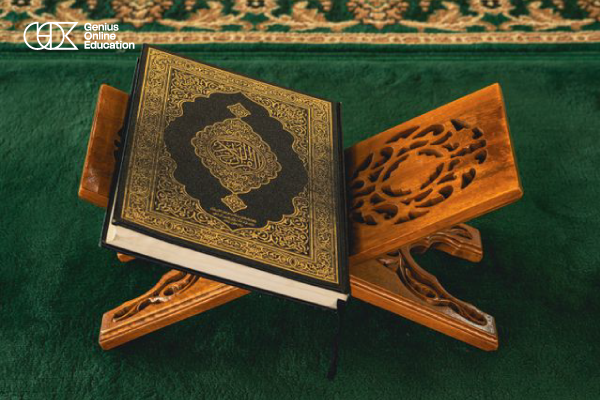
Genius Online offers a range of Islamic courses that help your child learn the Holy Quran, Tajweed, and Islamic studies in a gradual way suitable for their age. The programs cover building a foundation in correct reading, learning Quranic recitation and Tajweed, memorizing the Quran and understanding its meanings, as well as studying Aqeedah, Fiqh, Hadith, and Islamic morals. You can choose the program that best suits your child according to their age, level, and the skills you want to develop.
| Course | Age | What Does It Offer Your Child? |
|---|---|---|
| The Educated Reader Course | 6 to 13 years | Helps children develop reading and comprehension skills, expand their general knowledge, encourage continuous reading, and build a valuable learning habit from an early age. |
| Noorani Qaida Course | 4 to 7 years | Builds a strong foundation in reading Arabic letters and words correctly, helps children master letter articulation and proper pronunciation, and gradually introduces vowels, Tanween, Sukoon, Shaddah, Madd, and Quranic recitation. |
| Islamic Education Diploma | 5 to 16 years | A comprehensive program combining the Holy Quran, Tajweed, Hadith, Fiqh, morals, manners, daily supplications, faith, Aqeedah, Arabic language, and Islamic history to help build a well-rounded child. |
| Kuttab Course | For children | Focuses on developing writing and creative expression skills in an enjoyable way, helping children improve their ability to express their ideas and use language more effectively. |
How Do You Choose the Right Islamic Course for Your Child?
If your child is at the foundational stage and needs to learn letters, pronunciation, and reading from the beginning, the Noorani Qaida is a suitable choice. If your child can already read and wants to improve their recitation and apply Tajweed rules, a Holy Quran Recitation Course may be appropriate. If you are looking for a more comprehensive program combining the Quran, Tajweed, Fiqh, Hadith, Aqeedah, and Islamic morals, the Islamic Education Diploma provides an integrated learning path. The Kuttab Course focuses on recitation, Tajweed, memorization, simplified Tafsir, and Islamic values.
Also discover: Islamic Studies Courses for Children to nurture faith and character from an early age.
📖 Choose the right Islamic course for your child and start their journey of learning the Quran, Tajweed, and Islamic studies interactively with Genius Online.
The Importance of Learning Tajweed from an Early Age
If you want to help your child build a strong relationship with the Holy Quran, learning Tajweed from an early age can be an important step in their educational journey. Teaching children correct letter pronunciation and organized recitation from the beginning helps them develop a solid foundation that they can build upon over time, especially when learning is presented in a simple way appropriate for their age and ability to understand.
1. Developing Correct Reading Habits
Learning Tajweed helps children pay attention to how letters and words are pronounced while reciting the Quran, giving them the opportunity to practice more accurate reading from the early stages.
2. Improving Letter Pronunciation
Through Tajweed, children learn about the articulation points and characteristics of letters and practice correct pronunciation, which gradually helps improve the quality of their recitation.
3. Developing Correct Habits Early
When children learn recitation rules correctly from the beginning, applying them while reading gradually becomes a habit instead of developing inaccurate reading patterns that they may later need to correct.
4. Increasing Confidence During Quran Recitation
As children practice reading and notice improvements in their performance, their self-confidence increases, encouraging them to continue reciting and practicing new verses and Surahs.
5. Developing Focus and Attention
Applying Tajweed rules requires attention to the pronunciation of letters, vowel marks, and recitation techniques, which can help children develop focus, listening skills, and attention to detail while reading.
6. Making It Easier to Learn Rules Gradually
Starting at an early age allows children to learn Tajweed rules gradually, moving from simple concepts to more advanced rules according to their age and level.
7. Combining Learning with Practice
Learning Tajweed becomes more effective when children apply the rules while reciting the Quran instead of only memorizing them theoretically. Continuous practice therefore helps reinforce what they learn.
8. Encouraging Children to Continue Reciting the Quran
When learning the Quran and Tajweed is appropriate for a child’s age and includes encouragement and interaction, it can help create a positive connection with recitation and motivate children to continue developing their skills.
Learning Tajweed for Children with Genius Online
You can help your child begin their journey of learning Tajweed from an early age through a gradual approach suitable for beginners, focusing on explanation, application, and recitation practice. Genius Online provides an online educational experience that helps children learn the Quran and Tajweed in an interactive way that suits their learning needs.
Also read: Islamic Studies Books for Children
Start learning Tajweed from an early age with your child and help them build a strong foundation in correct Holy Quran recitation through a gradual approach with Genius Online.
Basic Tajweed Rules for Beginners
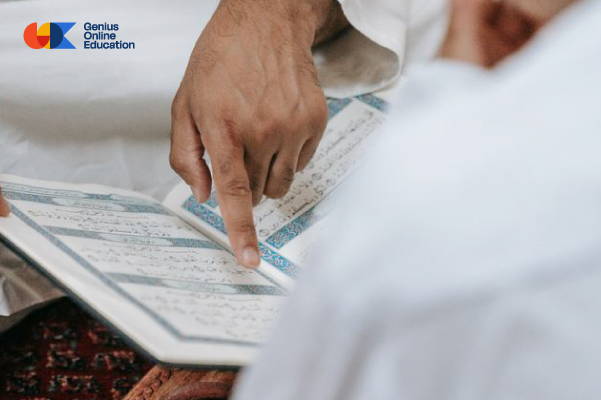
If you want to help your child learn Tajweed for beginners, it is important to start with a set of basic rules that help them understand how letters are pronounced and how to recite the Holy Quran correctly. These rules should preferably be introduced gradually, with listening and practical application to Quranic verses, so that the rules become a recitation skill rather than information that must simply be memorized.
1. Rules of Noon Sakinah and Tanween
The rules of Noon Sakinah and Tanween are among the basic rules beginners learn. They include Izhar, Idgham, Iqlab, and Ikhfa. Children practice identifying the appropriate rule when reading Noon Sakinah or Tanween in words and Quranic verses.
2. Rules of Meem Sakinah
Children learn the rules related to Meem Sakinah, including Izhar Shafawi, Idgham Shafawi, and Ikhfa Shafawi, while practicing correct pronunciation during recitation.
3. Madd
Children learn the concept of Madd and how to extend the sound in its appropriate places while reading the Quran. Beginners start with basic types of Madd and gradually move to other types according to their level.
4. Qalqalah
Children learn the rule of Qalqalah and how to pronounce its letters when they occur in the appropriate positions. They practice applying the rule while reading Quranic verses until they can identify it correctly.
5. Rules of Laam
Children learn some rules related to Laam, including the rules of Laam Al-Ta’rif, and practice distinguishing between Sun and Moon letters during reading.
6. Rules of Raa
Children learn the basic cases that help them understand how to pronounce the Raa with Tafkheem or Tarqeeq according to its position and the vowel associated with it, while listening to correct recitation and practicing it.
7. Tafkheem and Tarqeeq
Understanding Tafkheem and Tarqeeq helps children learn how to pronounce certain letters with the appropriate characteristic according to their position in a word, contributing to better pronunciation during Quranic recitation.
8. Articulation Points of Letters
Learning the articulation points of Arabic letters is an important foundation in Tajweed. Children learn where letters originate and how to pronounce them correctly, with particular attention to letters that may be difficult to distinguish.
9. Characteristics of Letters
After learning the articulation points, children begin to understand some of the characteristics of letters that affect how they are pronounced. These concepts should be introduced simply according to the child’s age and learning level.
10. Waqf and Ibtida
Children gradually learn the importance of understanding Waqf and Ibtida during recitation so they can stop and resume reading appropriately according to the meaning and proper recitation.
How Can Children Learn Tajweed Rules Easily?
The best approach for beginners is to combine simple explanations, listening, repetition, and practical application. Instead of asking children to memorize all the rules at once, one rule can be introduced at each stage and then applied to short words and verses until the child becomes accustomed to recognizing it while reading.
Listening to correct recitation and then repeating verses after the teacher also helps children practice pronunciation and performance, while errors can be corrected in an encouraging way appropriate for their age.
Learning Tajweed Rules for Children with Genius Online
You can help your child begin learning Tajweed rules from scratch through a gradual learning path designed for beginners, with an emphasis on practical application during Holy Quran recitation. Genius Online provides an online educational experience for children that combines explanation, practice, and follow-up, helping them improve their recitation step by step.
Also see: Study Islamic Sciences Online
Start learning Tajweed rules for beginners with your child in an easy and gradual way, and help them improve their Holy Quran recitation with Genius Online.
Steps to Learn Tajweed Easily with Genius Online
If you are looking for a way to help your child learn Tajweed easily, it is best to start gradually according to their age and level instead of introducing all the rules at once. With Genius Online, children can move from building their reading and pronunciation foundations to understanding Tajweed rules and applying them during Holy Quran recitation through clear educational steps that combine explanation, training, and practice.
1. Build a Foundation in Reading Arabic Letters
The Tajweed journey begins by strengthening the child’s ability to read and pronounce Arabic letters and ensuring that they can distinguish between similar letters and practice pronouncing them correctly.
2. Learn the Articulation Points of Letters
Children learn about the articulation points of Arabic letters and how each letter is produced while practicing correct pronunciation. This step provides a strong foundation before moving on to more advanced Tajweed rules.
3. Master Vowels and Tanween
Children learn Fathah, Dammah, Kasrah, and Tanween and practice reading words containing them until reading becomes easier and more fluent.
4. Learn Sukoon, Shaddah, and Madd
After mastering the basics, children begin learning about Sukoon, Shaddah, and Madd, applying them to words and verses so they can recognize them during recitation.
5. Learn the Basic Tajweed Rules
Children gradually move on to basic rules such as Noon Sakinah and Tanween, Meem Sakinah, Qalqalah, Tafkheem and Tarqeeq, and other rules needed for Quranic recitation.
6. Listen to Correct Quranic Recitation
Listening to correct recitation helps children learn the proper pronunciation of words and apply Tajweed rules. Therefore, it is preferable to combine explanation, listening, and repetition during learning.
7. Apply Tajweed Rules While Reading the Quran
Learning Tajweed is not complete through theoretical memorization alone. Children need to apply the rules they learn while reading verses and Surahs so that the rules become practical skills.
8. Practice and Repeat Regularly
Regular practice helps reinforce Tajweed rules and gradually improve recitation. Learning time can be divided into short sessions suitable for the child’s age to help maintain their focus and enjoyment.
9. Correct Mistakes in an Encouraging Way
It is natural for children to make mistakes while learning Tajweed. Therefore, they need their mistakes to be corrected in a simple and encouraging way that helps them understand what went wrong and improve without feeling frustrated or afraid of reading.
10. Progress from Foundations to Recitation
Every child has a different level, so it is best to start at the stage that matches their abilities. A child who needs a foundation in reading can begin with the Noorani Qaida, while a child who already has a good reading foundation can move on to more advanced recitation and Tajweed training.
Learning Tajweed for Children with Genius Online
Genius Online helps your child go through a gradual educational journey that begins with building reading and pronunciation skills, followed by learning Tajweed and applying its rules during Holy Quran recitation. Through a child-friendly educational approach, children can develop their skills step by step with the training and guidance they need to improve their recitation.
Also explore: Teaching Reading for Children
Start learning Tajweed easily with your child through Genius Online, and help them build a strong reading foundation and improve their Holy Quran recitation step by step.
Benefits of Learning Tajweed for Children

If you want to help your child read the Holy Quran correctly, learning Tajweed for children can be an important step in developing their recitation skills from an early age. Tajweed is not based only on memorizing rules. It helps children practice correct letter pronunciation, improve reading, and apply the rules while reciting Quranic verses in a gradual way appropriate for their age and level.
1. Improving Letter Pronunciation
Learning Tajweed helps children understand the articulation points and characteristics of letters and practice pronouncing them correctly, which contributes to improving their performance during Holy Quran recitation.
2. Mastering Holy Quran Recitation
One of the most important benefits of learning Tajweed is that children practice applying recitation rules while reading Quranic verses, helping them improve their reading level and achieve more accurate recitation through continued practice.
3. Building a Strong Foundation from an Early Age
Starting early helps establish a child’s reading, pronunciation, and Tajweed skills gradually, giving them a foundation they can build upon as they grow and move on to more advanced rules.
4. Developing Focus and Attention
Applying Tajweed rules requires attention to letters, vowel marks, and pronunciation. Therefore, recitation practice can help children develop their ability to focus and notice details while reading.
5. Improving Listening Skills
Learning Tajweed depends on listening to correct recitation and then trying to imitate and apply it, helping children develop listening skills and distinguish between different pronunciation patterns.
6. Increasing Confidence During Recitation
When children notice improvements in their reading and their ability to apply what they have learned, they experience a sense of achievement and confidence, encouraging them to continue reading the Quran and practicing new Surahs and verses.
7. Learning to Read in an Organized Way
Tajweed helps children pay attention to how words, letters, and stopping points are pronounced during recitation, making them more aware of the reading process and encouraging them to follow an organized approach to learning.
8. Developing Learning Through Practice
Tajweed is not only theoretical; it requires practice and repetition. Children learn a rule and then apply it while reading the Quran, which helps reinforce information and turn it into a practical skill.
9. Encouraging Children to Continue Reciting the Quran
When children learn Tajweed through a simple and interactive approach suitable for their age, Quranic recitation can become an enjoyable learning experience that encourages them to continue reading and practicing instead of feeling that the rules are difficult or complicated.
10. Preparing for More Advanced Stages
Learning the basics is a first step that children can build upon later, whether they want to memorize the Holy Quran, study Tajweed rules in greater detail, or further improve their recitation.
Learning Tajweed for Children with Genius Online
You can help your child benefit from learning Tajweed from an early age through an educational program suitable for their age and level that combines explanation, listening, and practical application. Genius Online provides educational programs that help children build a foundation in reading and learn the Quran and Tajweed through a gradual and interactive approach.
Also explore: The Easiest Quran Surahs to Memorize
Start learning Tajweed for children with your child in an easy and gradual way, and help them improve their Holy Quran recitation and build a strong reading foundation with Genius Online.
Common Mistakes in Quran Recitation
If you are helping your child learn to read the Holy Quran, it is natural for some mistakes to appear during the early stages of recitation. Understanding common Quran recitation mistakes helps parents recognize them and correct them gradually, especially because learning Tajweed depends on listening, application, and continuous practice rather than simply memorizing rules.
1. Pronouncing Some Letters Incorrectly
Children may have difficulty pronouncing some letters that have similar articulation points or sounds, which can cause them to confuse them while reading. Therefore, children need practice with the articulation points and characteristics of letters and should listen to correct pronunciation.
2. Incorrect Application of Vowels
One common mistake among beginners is failing to pay attention to Fathah, Dammah, and Kasrah, which affects the pronunciation of words. Repeated practice reading words with their vowel marks helps improve this skill.
3. Neglecting Madd Rules
Children may initially fail to notice the places where Madd occurs or the required length of the extension in certain words. Therefore, it is important to introduce Madd gradually and practice it during recitation.
4. Not Applying the Rules of Noon Sakinah and Tanween
The rules of Noon Sakinah and Tanween require continuous practice. Children may initially confuse Izhar, Idgham, Ikhfa, and Iqlab when they first begin learning.
5. Confusing the Rules of Meem Sakinah
Beginners may have difficulty distinguishing between the rules of Meem Sakinah. Children therefore need simple explanations and practical application using words and verses appropriate for their level.
6. Not Paying Attention to Qalqalah
Children may pronounce certain letters without applying the required characteristic in positions where Qalqalah occurs. Practicing by listening to correct pronunciation and repeating it helps improve their performance gradually.
7. Reciting Too Quickly
Children may try to read quickly to finish a Surah or verses, which can cause them to overlook some vowel marks or Tajweed rules. It is therefore better to encourage them to read calmly and focus on accurate pronunciation before speed.
8. Not Stopping at Appropriate Places
Children need to learn the basics of Waqf and Ibtida so they understand when to stop and when to resume reading, while considering the meaning and avoiding pauses that may affect the understanding of a verse.
9. Relying on Memorization Without Listening
Children may memorize Surahs and verses but still need to listen to correct recitation to learn proper pronunciation and performance. Therefore, it is preferable to combine memorization, listening, and repeating after a reciter or teacher.
10. Being Afraid of Making Mistakes While Reading
Some children may feel anxious when they make mistakes during recitation. Parents should therefore treat mistakes as a natural part of the learning process and correct them calmly and encouragingly.
How Can You Help Your Child Correct Recitation Mistakes?
Start by identifying the child’s most frequent mistakes, then focus on correcting one skill at a time. You can use listening, repetition, and practical application, while giving the child enough time to practice instead of expecting them to master all Tajweed rules in a short period.
Following up with a qualified teacher can also help identify mistakes that may be difficult for parents to notice and provide guidance appropriate to the child’s level.
Teaching Quran Recitation and Tajweed to Children with Genius Online
Your child can learn to read the Holy Quran and practice Tajweed rules gradually through Genius Online educational programs. The learning experience combines explanation, application, and practice, helping children improve their pronunciation and recitation and correct mistakes step by step.
Start learning Quran recitation and Tajweed with your child correctly and gradually with Genius Online, and help them improve their Holy Quran reading with confidence.
How Do Online Courses Help Children Learn Tajweed?
If you are looking for a flexible way to help your child learn Tajweed, online courses can be a suitable option, especially because children can learn from home at times that fit the family’s schedule. Online courses help children combine explanation, listening, and practical application, which are important elements in learning Quranic recitation and Tajweed rules.
1. Easy Learning from Home
Online Tajweed courses allow children to learn from home without the need to travel, saving parents time and effort and making it easier to organize learning sessions.
2. Learning in a Way That Suits the Child’s Age
Tajweed rules can be introduced to children gradually, starting with reading and pronunciation fundamentals and then moving on to different rules instead of presenting a large amount of information at once.
3. Listening and Practice During the Same Lesson
Learning Tajweed requires listening to correct pronunciation and then trying to apply it. Live lessons allow children to listen to the teacher, repeat words and verses, and practice Tajweed rules during recitation.
4. Correcting Recitation Mistakes
One of the main advantages of learning with an online teacher is that children can recite verses aloud and receive feedback that helps them identify pronunciation mistakes or errors in applying Tajweed rules and work on correcting them.
5. Gradual Learning of Tajweed Rules
Instead of trying to learn all the rules at once, the content can be divided into stages, such as articulation points, vowel marks, Madd, Noon Sakinah and Tanween, Meem Sakinah, and other rules according to the child’s level.
6. Increasing Children’s Engagement with Learning
When learning sessions are interactive and children participate in reading, answering, and repetition, they become more attentive and engaged, making Tajweed learning easier and more encouraging.
7. Tracking the Child’s Progress
Regular lessons help parents monitor their child’s progress in reading and recitation, identify the skills they have mastered, and recognize the areas that need additional practice.
8. Saving Time and Providing Flexibility
Online lessons can be scheduled according to the times available for the child and family, making it easier to continue learning, especially when children have school and daily activities.
9. Combining Foundations with Tajweed
A beginner may first need a strong foundation in reading letters and vowel marks before studying advanced Tajweed rules. Therefore, parents can choose a program that starts at the appropriate level, such as the Noorani Qaida for children at the foundation stage, followed by Quran recitation and Tajweed levels.
10. Encouraging Children to Continue Learning
A gradual and interactive approach can reduce children’s feeling that Tajweed rules are difficult, especially when they notice progress in their reading and recitation. Encouragement and continuous support are important factors in maintaining children’s interest in learning.
Learn Tajweed Online for Children with Genius Online
Genius Online offers Islamic programs for children that help them learn the Quran and Tajweed according to different levels. Parents can choose the program that suits their child’s age and level, whether they need to build a reading foundation through the Noorani Qaida or want to develop their Quran recitation and Tajweed skills.
Also explore: Tajweed Rules for Children
Start learning Tajweed online with your child through a flexible and interactive approach with Genius Online, and help them develop their recitation and learn Tajweed rules step by step.