
Learning computer programming languages for kids has become one of the best ways to help children understand the technology around them and develop digital skills they will need in their education and future. Programming is not limited to writing code; it also helps children think systematically, analyze problems, and turn their ideas into games, applications, and digital projects.
With the variety of programming languages such as Python and JavaScript and others, parents may find it difficult to choose the right language based on their child’s age and skill level. That is why starting with a gradual learning path that combines ease of learning with practical application is important, allowing children to understand programming concepts in a way that matches their abilities and interests.
Through Genius Online, your child can discover the world of programming through specialized courses that start with Programming Principles, then progress to Python, web development, and applications, leading to more advanced fields such as data analysis and artificial intelligence. This gradual approach gives children the opportunity to discover the field that suits them and build their skills step by step.
Start your child’s journey in learning computer programming languages with Genius Online today, and choose the right learning path to help them develop programming skills and turn their ideas into digital projects.
Programming Language Courses for Kids
Programming language courses for kids help introduce children to the world of programming through a gradual learning process that starts with understanding the basics and then moves on to learning programming languages and using them to create practical projects. Genius Online offers a variety of learning paths suitable for children and beginners at different levels, starting with programming principles and progressing to Python, JavaScript, web development, and other technology fields.
| Course | What Will the Child Learn? |
|---|---|
| Programming Principles for Kids | The child learns programming basics, logical thinking, command sequences, and algorithms in a simple way, and begins applying what they learn through practical projects. |
| Python for Beginners | The child learns Python from scratch and practices writing code, understanding basic programming concepts, and creating simple projects. |
| Python: Advanced Step | The child progresses to more advanced Python concepts and projects after building a solid foundation in the language. |
| JavaScript: Make the Web Alive | The child learns how to use JavaScript to add interactivity, movement, and functionality to web pages and projects. |
| Static Web Pages Using HTML5 and CSS3 | The child learns the basics of building web pages using HTML5 and styling and designing them with CSS3, creating a foundation in website development. |
| Full Web Development | The child learns the stages of website development, from the front end to the programming aspects related to web development. |
| Database (SQL) | The child learns the basics of working with databases, storing, managing, and retrieving data using SQL. |
| Backend Course Using Node.js | The child learns the basics of server-side programming, working with the backend of applications, and connecting applications to databases. |
| Software Testing | The child learns the basics of software testing, identifying errors, and improving application quality before use. |
| Programming Diploma for Kids | An integrated learning path that covers multiple areas of programming and takes the child from the basics to creating more advanced projects. According to the website, it is suitable for ages 11 to 18. |
| Introduction to Artificial Intelligence | The child learns the concepts and applications of artificial intelligence, creating a foundation for moving from programming into exploring intelligent technologies. |
How Do You Choose the Right Programming Language Course for Your Child?
Choosing a programming language course for kids depends on the child’s age, skill level, and interests. If the child is starting from scratch, it is better to begin with the Programming Principles course, followed by Python. For a child interested in website development, they can progress from HTML5 and CSS3 to JavaScript, while children with a stronger foundation can explore databases, backend development, and other learning paths.
The most important thing is for children not to learn a language simply by memorizing code, but to understand programming logic and apply what they learn through practical projects. Genius Online’s learning paths emphasize practical application and projects alongside programming concepts.
Learn more about: Programming and Artificial Intelligence for Kids: Future Skills Step by Step
Start programming language courses for kids with Genius Online today, and choose the right learning path for your child’s age and skill level to begin learning programming and developing technical skills step by step.
What Are Programming Languages for Kids?
 What Are Programming Languages for Kids?
Programming languages for kids are languages and tools that help children learn how to give instructions to computers in a gradual way that matches their age and skill level. Children do not need to start with complex programming languages; they can begin with simple concepts and then move to more advanced languages as their skills develop.
Python
Python is one of the most popular choices for children and beginners because of its simple syntax and easy-to-read code. It can be used to learn programming fundamentals and then progress to projects, data analysis, and artificial intelligence.
JavaScript
JavaScript helps children learn how to program web pages and add interaction and movement to websites. It is more suitable for older children who have a good foundation in programming and want to expand their web development skills.
HTML and CSS
HTML and CSS are an important starting point for children interested in website design. HTML helps build the elements of web pages, while CSS is used to style and define their appearance.
Scratch
Scratch uses visual programming by arranging ready-made blocks and commands, making it a suitable way to introduce younger children to programming concepts and logic in an easy and interactive way without requiring them to write complex code.
Programming Languages and Application Development
After developing a good foundation in programming, children can move on to learning mobile application development technologies and digital projects based on their age, skill level, and learning goals.
How Do You Choose the Right Programming Language for a Child?
Choosing the right programming language for kids depends on age, experience, and interests. If the child is a beginner, it is better to start with basic concepts or visual programming, while older children can move on to Python and then JavaScript, web development, mobile applications, and other fields.
Genius Online offers gradual learning paths that help children progress from Programming Principles to different programming languages and technologies, with a focus on practical application and project-based learning according to each child’s level.
Learn more about: Learn Programming Online at the Best Price in 2026
💻 Help your child choose the right programming language and start their programming journey with Genius Online to develop technical skills and turn their ideas into digital projects.
Most Popular Programming Languages for Kids
The programming languages suitable for kids vary according to the child’s age, skill level, and interests. Some languages and tools help beginners understand programming fundamentals in a simple way, while others are more suitable for older children who want to expand into web development, mobile applications, and artificial intelligence. Choosing the right language can make the learning experience easier and more engaging.
Python
Python is among the most suitable languages for children and beginners because of its simple syntax and easy-to-read code. Children can use it to learn programming fundamentals and create practical projects, then expand their skills into data analysis and artificial intelligence.
JavaScript
JavaScript is one of the most popular languages used in web development. Older children can learn it after acquiring programming fundamentals. It helps them add interaction and movement to websites and create more advanced web projects.
HTML
HTML is used to build the structure of web pages and can be a suitable starting point for children interested in website design. It teaches them how to organize text, images, and different elements within a page.
CSS
CSS works with HTML to style web pages and helps children learn about colors, fonts, spacing, and element arrangement, combining technical skills with creativity in website design.
Scratch
Scratch is a suitable tool for children in the early stages of learning programming because it relies on arranging programming blocks instead of writing long lines of code. This helps children understand programming logic through games and interactive projects.
Java
Older children who have a good foundation in programming can move on to Java to explore more advanced programming concepts and build a strong foundation that can be developed over time.
C++
C++ is a powerful programming language used in many technology fields. It can be studied at advanced stages after children have developed a solid understanding of programming fundamentals and algorithmic thinking.
What Is the Best Programming Language for Kids?
There is no single programming language that is suitable for every child. Choosing the best programming language for a child depends on their age, skill level, and learning goals. Younger children can start with visual programming tools, then move to Python and later explore JavaScript, web development, mobile applications, or artificial intelligence according to their interests.
Through Genius Online, children can start with programming fundamentals and gradually learn different languages and technologies through structured learning paths and practical projects that help them develop their skills step by step.
Learn more about: Learning Python from Scratch at the best price in 2026
💻 Choose the right programming language for your child’s age and skill level and start learning with Genius Online to develop technical skills and discover the world of programming.
How Does a Child Choose Their First Programming Language?
 How Does a Child Choose Their First Programming Language?
Choosing a first programming language for a child should not depend only on the popularity of the language. It should also consider the child’s age, skill level, interests, and learning goals. The more suitable the starting point is for the child’s abilities, the easier it becomes to understand programming concepts, continue learning, and turn knowledge into practical projects.
1. Start with the Child’s Experience Level
If the child is learning programming for the first time, it is better to start with a simple path that introduces basic concepts such as commands, sequences, and programming logic instead of moving directly into complex code.
2. Choose a Language Based on Age
A child’s ability to understand programming concepts changes from one age group to another. Therefore, the selected language or learning tool should match the child’s reading, comprehension, and programming abilities.
3. Consider the Child’s Interests
A child’s interests can be an important factor when choosing a language. If the child enjoys games and interactive projects, they can be guided toward programming paths that help them create these ideas. Children interested in websites and applications can choose web or application development paths.
4. Choose an Easy-to-Learn Language
It is better to start with a language that has clear rules and easy-to-read code, allowing the child to focus on understanding programming logic instead of struggling with the complexity of the language itself.
5. Choose a Language That Can Be Used for Real Projects
Children become more motivated when they can see the results of what they learn. Therefore, it is useful to choose a language that allows them to create simple programs, games, websites, or applications and develop them as their skills improve.
6. Python Is a Suitable Option for Many Beginners
Python is known for its simple syntax and easy-to-read code. It can be used in various fields, including programming, data analysis, and artificial intelligence, making it a suitable option for children after they have developed a foundation in programming principles.
7. A Child Does Not Need to Learn More Than One Language at First
It is better for a child to focus on one language initially so they can understand fundamental concepts such as variables, conditions, loops, and functions. They can then move to another language when they are ready.
8. Choose a Gradual Learning Path
Having a clear learning plan helps children move from basic to more advanced levels without feeling overwhelmed by sudden difficulty. They can start with programming principles and then move to Python, web development, or mobile applications according to their interests.
How Does Genius Online Help Children Choose a Programming Language?
Genius Online offers a variety of learning paths that start with Programming Principles and gradually progress to Python, website development, mobile applications, and other technology fields, helping children choose a path that matches their age, skill level, and interests.
Learn more about: Ideas for Developing Children’s Skills — Best Activities and Methods with Genius Online
💻 Help your child choose their first programming language and start an organized, interactive learning journey with Genius Online to build a strong foundation in programming.
The Difference Between Different Programming Languages
Programming languages differ in terms of coding syntax, ease of learning, and the fields in which they are used. Therefore, no single language is suitable for every project or every child. Understanding the differences between programming languages helps parents and children choose the right path based on age, interests, and programming level.
| Language | Main Uses | Suitability for Kids | What the Child Learns |
|---|---|---|---|
| Python | Programming, data analysis, artificial intelligence, and automation. | Suitable for beginners and children who have a programming foundation. | Writing code, variables, conditions, loops, and functions. |
| JavaScript | Web development and interactive applications. | Suitable for children interested in web development after learning the basics. | Interacting with web pages and adding movement and functionality to websites. |
| HTML | Building the structure of web pages. | Suitable as a starting point for children interested in website design. | Organizing text, images, and elements within web pages. |
| CSS | Styling and designing web pages. | Suitable for children who enjoy design and creativity. | Colors, fonts, spacing, and arranging page elements. |
| Scratch | Games, projects, and educational animations. | Very suitable for the early stages of learning programming. | Sequences, events, conditions, repetition, and programming logic. |
| Java | Application and system development and programming projects. | More suitable for older children after acquiring a programming foundation. | Object-oriented programming concepts and application development. |
| C++ | High-performance programs, games, and some advanced systems. | Suitable for advanced stages after understanding programming fundamentals. | Advanced programming thinking and efficient process management. |
Which Language Is Best for a Child?
There is no single best programming language for kids, because the choice depends on the child’s learning goals. If they are just starting, they can begin with visual programming tools or Programming Principles, then move to Python. If they are interested in websites, they can learn HTML and CSS followed by JavaScript, while children interested in advanced fields can gradually move toward other languages and technologies.
Through Genius Online, children can start at the appropriate level and gradually progress to different programming languages and specializations, with a focus on practical application and projects that help them develop their skills.
Learn more about: Summer Courses for Kids — Make the Most of the Vacation with Genius Online
💻 Choose the right programming language for your child’s age and interests and start the learning journey with Genius Online to build their programming skills step by step.
The Difference Between Different Programming Languages
 The Difference Between Different Programming Languages
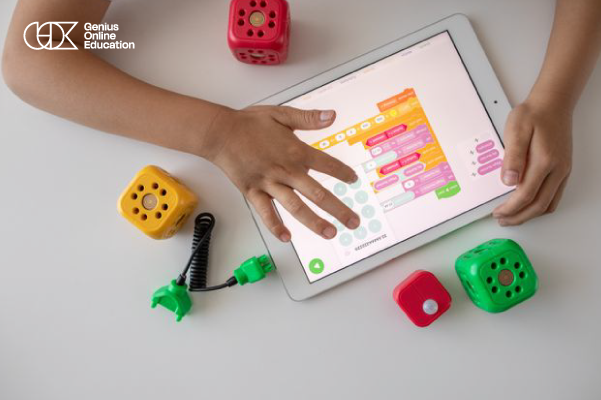
Programming languages differ in terms of coding syntax, ease of learning, and the fields in which they are used. Therefore, no single language is suitable for every project or every child. Understanding the differences between programming languages helps parents and children choose the right path based on age, interests, and programming level.
| Language | Main Uses | Suitability for Kids | What the Child Learns |
|---|---|---|---|
| Python | Programming, data analysis, artificial intelligence, and automation. | Suitable for beginners and children who have a programming foundation. | Writing code, variables, conditions, loops, and functions. |
| JavaScript | Web development and interactive applications. | Suitable for children interested in web development after learning the basics. | Interacting with web pages and adding movement and functionality to websites. |
| HTML | Building the structure of web pages. | Suitable as a starting point for children interested in website design. | Organizing text, images, and elements within web pages. |
| CSS | Styling and designing web pages. | Suitable for children who enjoy design and creativity. | Colors, fonts, spacing, and arranging page elements. |
| Scratch | Games, projects, and educational animations. | Very suitable for the early stages of learning programming. | Sequences, events, conditions, repetition, and programming logic. |
| Java | Application and system development and programming projects. | More suitable for older children after acquiring a programming foundation. | Object-oriented programming concepts and application development. |
| C++ | High-performance programs, games, and some advanced systems. | Suitable for advanced stages after understanding programming fundamentals. | Advanced programming thinking and efficient process management. |
Which Language Is Best for a Child?
There is no single best programming language for kids, because the choice depends on the child’s learning goals. If they are just starting, they can begin with visual programming tools or Programming Principles, then move to Python. If they are interested in websites, they can learn HTML and CSS followed by JavaScript, while children interested in advanced fields can gradually move toward other languages and technologies.
Why Should a Child Learn One Language First?
Focusing on one language initially helps children understand fundamental programming concepts without being distracted by the rules of multiple languages. Once they master the basics, moving to a new language becomes easier because many common programming concepts will already be familiar.
Through Genius Online, children can start at the appropriate level and gradually progress to different programming languages and specializations, with a focus on practical application and projects that help them develop their skills.
Learn more: A Guide to Choosing Courses for Kids Based on Your Child’s Age
💻 Choose the right programming language for your child’s age and interests and start the learning journey with Genius Online to build their programming skills step by step.
Benefits of Learning Computer Programming Languages for Kids
Learning computer programming languages for kids helps build a strong foundation for understanding technology and using it more consciously and creatively. Children do not only learn how to write code; they also develop a range of programming and cognitive skills that help them analyze problems, build projects, and turn their ideas into digital applications, games, and websites.
1. Developing Logical Thinking
Learning computer languages trains children to organize commands and understand the relationship between inputs and results, helping them develop an organized way of thinking that can be applied to programming, education, and everyday life.
2. Developing Problem-Solving Skills
While writing programs, children encounter errors and challenges that require analysis and experimentation. Over time, they learn how to break a problem into smaller steps and search for the appropriate solution.
3. Learning Programming Fundamentals
Children learn important concepts such as variables, conditions, loops, functions, and algorithms, which provide a foundation for learning more advanced languages and technologies.
4. Turning Ideas into Digital Projects
Programming gives children the opportunity to turn their ideas into tangible projects such as games, programs, websites, and applications, making learning more connected to practical application.
5. Developing Creativity and Innovation
Children can experiment with different ideas, develop their projects, and add new features, encouraging innovation rather than simply using ready-made tools and projects.
6. Learning How to Identify and Fix Errors
Children learn how to read programming errors, trace their source, test changes, and improve their code. This is an essential software development skill that also encourages analytical thinking.
7. Improving Algorithmic Thinking
Children learn how to turn a problem into a series of organized and logical steps that a computer can execute, helping them understand algorithms and develop more structured solutions.
8. Preparing to Learn Artificial Intelligence
Learning programming gives children an important foundation for moving into fields such as artificial intelligence, data analysis, and machine learning, especially when learning languages such as Python.
9. Developing Web and Application Development Skills
After acquiring programming fundamentals, children can expand their knowledge of languages and technologies such as HTML, CSS, and JavaScript to learn how to build web pages and interactive projects or move into application development paths.
10. Increasing Confidence in Building Projects
When children see the code they have written turn into a working program, game, or project, they gain a stronger sense of achievement and confidence in their ability to learn and experiment.
11. Developing Self-Learning Skills
Programming requires research, experimentation, and debugging, helping children develop continuous learning habits and the ability to search for the information they need to complete their projects.
12. Preparing for a Technology-Focused Future
Computer languages give children a foundation that can be developed over time in many technology fields, including programming, web and application development, data analysis, and artificial intelligence.
How Does Genius Online Help Children Learn Computer Languages?
Genius Online offers gradual learning paths that start with Programming Principles, followed by Python, web development, applications, and other fields based on the child’s age, skill level, and interests. Project-based learning helps children apply what they learn instead of relying only on theoretical knowledge.
Learn more about Islamic studies courses for kids to develop faith and good values from an early age.
💻 Start learning computer programming languages for kids with Genius Online today and help your child develop programming skills and turn their ideas into digital projects.
Best Programming Language for Beginners
If you are looking for the best programming language for beginners, it is important not to base the choice on the name of the language alone, but also on how easy it is to learn and the purpose for which it will be used. Some languages are suitable for those starting programming from scratch, while others are better suited to learners interested in web development, applications, or games. For children, choosing the right language is an important step toward making learning enjoyable and achieving clear progress.
Python for Beginners
Python has a simple structure and clear code, making it suitable for teaching beginners programming fundamentals gradually. The skills learned can later be developed in fields such as data analysis and artificial intelligence.
Scratch for Children Starting to Learn
If a child is young and has never learned programming before, Scratch can be a suitable starting point. It uses visual commands that can be arranged to create games, stories, and interactive projects, helping children understand programming logic without focusing on writing code.
JavaScript for Learning Web Development
JavaScript is a good option for beginners interested in website design and interactive projects, especially after learning the basics of HTML and CSS. It allows learners to add functionality and interactions to web pages.
HTML and CSS as a Starting Point for Website Design
Beginners interested in web development can start by learning HTML and CSS to understand how web pages are structured and styled, then move to JavaScript to add interactivity and programming functionality.
How Do You Choose the Best Language for a Beginner?
The choice can be based on the learning goal:
- For younger children and complete beginners: Scratch and basic programming concepts.
- For general programming: Python is a practical and relatively easy option.
- For web development: HTML and CSS followed by JavaScript.
- For eventually moving into artificial intelligence: Python is a strong starting option.
- For learning games and interactive projects: Choose a learning path based on the child’s age and the tool used in the course.
Why Should Beginners Avoid Learning Multiple Languages at Once?
Learning several languages at the same time can overwhelm beginners, especially during the early stages. It is better to choose one language and focus on understanding fundamental concepts such as variables, conditions, loops, and functions, then move to another language after building a solid foundation.
The Best Starting Point for Children Learning Programming
There is no single language that is best for every child. The best choice is the programming language that matches the child’s age, interests, and learning goals. Children can start with Programming Principles and then move to Python, web development, or other learning paths based on their skill level.
Through Genius Online, children can follow a gradual learning path that starts with the basics and progresses to different programming languages and specializations through practical application and projects.
Start with your child at the right level and choose the best programming language for beginners based on their age and interests with Genius Online.
The Future of Children with Programming Education
Learning programming for kids has become an important investment in future skills, especially with the rapid development of technology and artificial intelligence and the growing reliance on digital solutions across many fields. Programming does not only teach children how to write code; it also helps them develop organized thinking and understand technology so they can participate in creating it rather than simply using it.
1. Broader Opportunities in Technology Fields
Learning programming gives children a foundation that can be developed in many areas in the future, including web and application development, software engineering, game development, data analysis, and artificial intelligence.
2. Preparing for the Age of Artificial Intelligence
Understanding programming helps children interact with artificial intelligence technologies more consciously and provides a foundation for studying fields such as machine learning and data analysis.
3. The Ability to Build Real Projects
As children’s skills develop, they can move from simple projects to designing games, applications, websites, and more advanced technology projects, turning learning from theoretical knowledge into practical skills.
4. Developing Thinking and Problem-Solving Skills
Training children to analyze problems, break them down into steps, and write logical solutions helps develop skills that can be useful in education and many future fields.
5. Developing Creativity and Innovation
Programming gives children space to experiment with their ideas and turn them into digital projects, encouraging innovation and helping them explore new ways to implement their ideas.
6. Developing Continuous Learning Skills
The programming world is constantly evolving, so children learn that developing their skills does not stop with one language. They can continue learning new technologies and adapting to modern tools throughout their educational and professional journey.
7. Opportunities to Work in Diverse Fields in the Future
Programming skills can be useful even if the child does not become a programmer directly, as technology is integrated into many fields such as digital business, data analysis, design, cybersecurity, artificial intelligence, and technology entrepreneurship.
8. Turning Children from Technology Users into Technology Creators
Instead of limiting their role to using applications and games, programming helps children understand how they work and participate in designing their own projects, strengthening their confidence in their ability to create digital solutions.
How Does Genius Online Help Build a Child’s Future?
Genius Online offers learning paths that help children start with Programming Principles and gradually progress to Python, website development, mobile applications, and other technology fields. This gradual approach allows children to build their skills step by step according to their age, skill level, and interests.
After developing a programming foundation, children can explore more advanced fields such as artificial intelligence and data analysis, helping them build a knowledge base that can continue to develop over time.
💻 Start building your child’s future through programming education today and help them develop technology, creativity, and problem-solving skills with Genius Online.