
If you are looking for the best places to learn German for children, choosing an educational program that suits your child’s age and learning style can be a strong starting point for acquiring a new language with confidence. Learning German from an early age helps children discover new words and expressions while developing listening, pronunciation, and communication skills, especially when learning takes place through interactive activities, stories, and educational games.
Parents may feel confused when choosing between language centers, traditional lessons, and online courses. However, what matters most is not the location where learning takes place, but rather the quality of the program, the teaching method, and how well it suits children. The simpler and more interactive the content is, the more willing children become to participate, speak, and try new words without feeling pressured or bored.
Genius Online offers a German language course for children aged 8 to 16 through interactive live sessions, focusing on vocabulary, pronunciation, listening, speaking, and practical application. The learning experience also relies on activities, games, stories, and exercises that help children use the language gradually.
If you want your child to start learning German in a fun and interactive way from home, choosing a specialized course designed for children can give them a strong language foundation and help them build confidence in using German step by step with Genius Online.
Best German Language Courses for Children
If you are looking for the best German language courses for children, choosing a course that matches your child’s age and level is the first step toward building a strong foundation in the language. Genius Online offers a German language course for children aged 8 to 16, with live and interactive lessons that help children develop listening, speaking, vocabulary, and communication skills in German.
| Course | Age | What Will the Child Learn? |
|---|---|---|
| German Language Course for Children | 8 to 16 years | The course helps children gradually develop their German communication skills by improving vocabulary, listening, speaking, and practical application through an educational curriculum designed for children and teenagers. |
Why Choose the German Language Course for Children with Genius Online?
The course is based on a curriculum designed by Klett-Sprachen, one of the German publishing companies specializing in developing educational curricula for young people and adults. Lessons are delivered through interactive live sessions, allowing the teacher to interact with students throughout the lesson.
Learning takes place in small classes with a maximum of 12 students, which helps increase opportunities for participation and interaction. The course also relies on practical projects through which children can apply what they have learned.
Is the German Course Suitable for Your Child?
If your child is between 8 and 16 years old and wants to learn German, this course is suitable as an organized starting point for developing their language skills. For children under 8, it is better to choose a language program specifically designed for younger age groups rather than enrolling them in this course. Genius Online explains that the German course is designed for children aged 8 to 16.
Start learning German online with your child through an interactive course suitable for their age, and help them build strong language skills with Genius Online.
Why Should Children Learn German?

Learning German for children is a valuable opportunity to help your child acquire a new language and broaden their knowledge from an early age. Children at young ages have a good ability to acquire languages through listening, repetition, and practice. With a teaching method suitable for their age, German can become an enjoyable and useful skill for the future.
1. Developing Communication Skills
Learning German helps children acquire new words and expressions and use them in simple situations, supporting their ability to listen, speak, express themselves, and interact with others.
2. Expanding the Child’s Knowledge
Learning a new language introduces children to a different culture and community and gives them the opportunity to discover new words, customs, and information in ways that can broaden their interests.
3. Enhancing Learning Skills
While learning a language, children practice listening, remembering, and connecting words with pictures and situations, giving them opportunities to develop a range of learning and concentration skills.
4. Preparing for Future Educational Opportunities
German can be a useful skill as children progress through their education, especially if they become interested in studying or participating in educational programs related to Germany or German-speaking countries in the future.
5. Developing Pronunciation and Listening Skills
Early exposure to German through listening, repetition, and conversation helps children become familiar with German sounds, supporting the gradual development of pronunciation and listening comprehension.
6. Building Self-Confidence
When children can understand new words or form and speak a sentence, they experience a sense of achievement. This feeling can encourage them to continue learning and try more advanced words and situations.
7. Developing Thinking Skills
Learning a new language requires children to recognize different words, rules, and patterns. This can provide opportunities to practice comparing, remembering, and connecting information.
8. Benefiting from Interactive Learning
German can be made enjoyable for children through games, stories, pictures, activities, and conversations instead of relying only on traditional memorization. This helps children use the language in practical situations.
When Should a Child Start Learning German?
Children can learn languages from an early age, but the most important factor is choosing content and a teaching method that match the child’s age and ability to concentrate. The goal should not be to pressure children to memorize a large number of words, but rather to give them an enjoyable experience that encourages them to listen, speak, and practice consistently.
Learning German for Children with Genius Online
If your child is within the appropriate age range, they can learn German through an interactive educational program that helps them gradually develop their language skills. Genius Online offers a German language course for children aged 8 to 16, with live and interactive lessons focused on vocabulary, listening, speaking, and communication.
Learn more about German Conversation Course for Kids Online with Experienced Instructors
Give your child the opportunity to acquire German language skills, communication abilities, and self-confidence through an interactive learning experience suitable for their age with Genius Online.
Benefits of Learning German for Children
Learning German for children provides an opportunity to acquire a new language and develop a range of linguistic and cognitive skills that children can benefit from throughout their different stages of education. With a teaching method suitable for their age, learning German becomes an enjoyable experience that combines listening, speaking, practice, and interaction.
1. Developing Listening and Speaking Skills
Continuous exposure to German helps children understand new words and expressions and gradually use them in conversations and everyday situations, supporting their listening and speaking skills.
2. Expanding Vocabulary
As children continue learning, they discover new vocabulary and begin forming simple sentences, helping them expand their vocabulary and use words with greater confidence.
3. Improving Pronunciation
Practicing listening, repetition, and conversation helps children recognize German sounds and learn how words are pronounced, especially when they receive continuous correction and guidance from the teacher.
4. Enhancing Concentration and Memory
Learning new words and expressions requires children to remember them and connect them with pictures, situations, and sounds, giving them opportunities to practice concentration and memory in an enjoyable educational way.
5. Expanding Knowledge and Cultural Awareness
Learning German gives children an opportunity to discover German culture and the communities that use the language, helping them explore new customs, information, and ideas.
6. Building Self-Confidence
When children can understand a sentence or have a simple conversation in German, they experience a sense of achievement. These experiences can help increase their confidence in their ability to learn and acquire new skills.
7. Developing Learning Skills
Learning a new language helps children follow steps, practice vocabulary, and review what they have learned, supporting the development of good learning habits that can be useful in other areas.
8. Supporting Future Opportunities
German can be a valuable addition to a child’s skills as they grow older, especially if they become interested in studying, working, or participating in educational programs related to Germany or German-speaking countries in the future.
9. Making Learning More Enjoyable
When language is presented through games, stories, pictures, conversations, and interactive activities, children can learn in a more natural way and become more enthusiastic about participating and practicing.
How Can You Help Your Child Learn German?
Start at a level appropriate for their age and encourage them to listen to and speak German without being afraid of making mistakes. Learning should be gradual and should focus on practice and interaction rather than memorization alone.
Learning German for Children with Genius Online
If your child is within the appropriate age range, Genius Online offers a German language course for children aged 8 to 16, with live and interactive lessons that help develop vocabulary, listening, speaking, and communication skills in German.
Also discover: German Course for Kids
Start your child’s German learning journey and help them develop listening, speaking, pronunciation, and self-confidence through interactive learning with Genius Online.
How to Choose the Best Place to Teach German to Children?

Choosing the best place to teach German to children does not depend only on the course price or how close the location is to home. Parents should consider the child’s age and level, how the content is delivered, and the teachers’ experience in working with children. The more suitable the program is for the child’s needs, the more likely they are to enjoy learning and gradually develop listening, speaking, and pronunciation skills.
1. Choose a Program Suitable for the Child’s Age
Start by making sure that the course is designed for your child’s age group, because the method of teaching German to a young child differs from teaching an older child. Genius Online offers a German language course for children aged 8 to 16.
2. Check the Child’s Level
It is important to know whether the child is a complete beginner or already has some previous knowledge of German. A good course should clearly state the starting level and present the content gradually so the child does not feel that the lessons are too difficult or beyond their abilities.
3. Choose a Provider Specialized in Teaching Children
Teaching children requires a different approach from teaching adults. Therefore, look for a platform or center with experience in working with children and using activities, stories, games, and interactive exercises that help them learn without feeling bored.
4. Pay Attention to the Teaching Method
Do not make memorization the main factor when choosing a course. It is better for children to learn through listening, speaking, conversation, activities, and practical application, because using the language helps turn words and grammar into real skills.
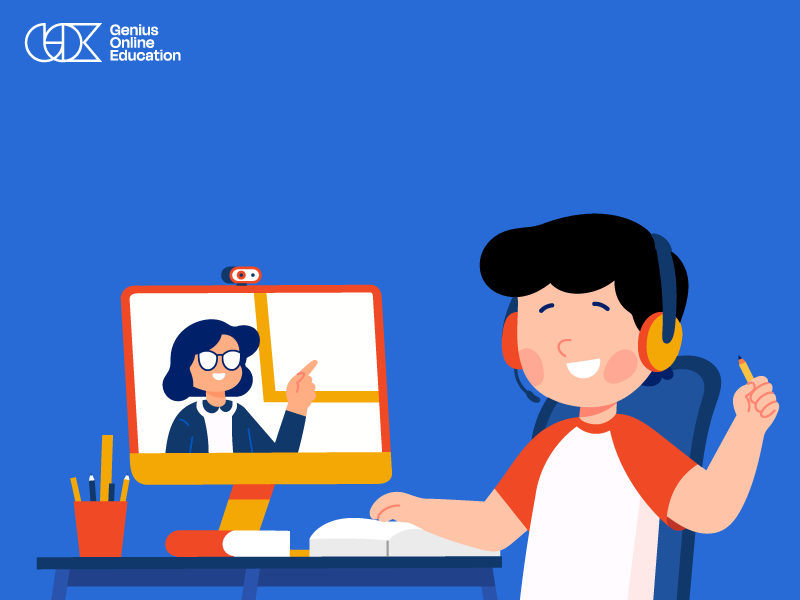
5. Choose a Live and Interactive Course
One advantage of live learning is that children can interact with the teacher, ask questions, and receive correction and guidance during the lesson. Genius Online explains that its programs are delivered through interactive live sessions, with limited-size classes of up to 12 students.
6. Make Sure There Are Practical Activities
Children learn more effectively when they actively participate. Therefore, look for a course that includes educational games, stories, dialogues, exercises, and simple projects that help children use the language rather than simply memorize words. The German course page at Genius Online explains that the program relies on games, interactive activities, stories, conversations, and practical exercises.
7. Ask About Monitoring the Child’s Progress
It is useful for the program to include continuous assessment and monitoring to determine the child’s progress and identify strengths and areas that need further practice. Parent follow-up also helps parents understand what their child is learning and how they can support them at home.
8. Consider the Comfort of the Child and Family
Learning German online can be a practical option for families looking for flexibility and reduced travel time, especially when lessons are live and interactive rather than simply recorded videos. Genius Online provides learning from home through its live programs.
9. Compare the Course Content with What the Child Will Gain
Before enrolling, ask about the skills the child will acquire: Will they learn vocabulary? Will they practice pronunciation and listening? Will they participate in conversations? Does the curriculum progress from basic concepts to more advanced levels? The clearer the program’s objectives are, the easier it becomes to choose the right course.
Why Choose Genius Online to Teach German to Children?
Genius Online offers a German language course for children aged 8 to 16. The program focuses on interactive learning and developing vocabulary, listening, and speaking skills, with activities that help children apply what they learn in practical ways. The platform also provides live lessons in limited-size classes, giving children greater opportunities to interact with the teacher.
Also discover: Training Course Names for Kids 2026
Choose the best place to learn German for your child based on their age, level, and preferred learning method, and start an interactive learning journey with Genius Online.
Online Learning or Learning at a Center? Which Is Better for Children Learning German?
When choosing a method for learning German for children, many parents are unsure whether to enroll their child in a traditional educational center or choose an online course. In reality, both methods can be useful, but interactive online learning offers practical advantages that make it a better option for many families, especially when the course is live with a teacher and relies on participation, conversation, and activities rather than simply watching recorded videos.
| Comparison | Online Learning | Learning at a Center |
|---|---|---|
| Flexibility | Greater flexibility to learn from home and save travel time. | Requires commitment to the center’s schedule and location. |
| Comfort | The child learns in a familiar and comfortable home environment. | The child needs to travel and adapt to a new learning environment. |
| Time Saving | No time is wasted traveling to and from the center. | Travel time is added to the lesson time. |
| Interaction | It can be highly interactive when lessons are live and allow dialogue, activities, and participation. | Provides direct interaction in the classroom and may suit children who prefer in-person learning. |
| Access to Teachers | Provides access to teachers and programs without making the center’s proximity to home a deciding factor. | Teacher selection depends more heavily on the centers available in the local area. |
| Digital Practice | Combines language learning with digital tools that children will need in the future. | Focuses more heavily on the traditional classroom experience. |
| Suitable for Families | A practical and flexible option for families who prefer learning from home and saving time and effort. | May be suitable if the center is nearby and the child prefers in-person learning. |
Why Do We Prefer Online Learning for Children?
The main advantage is not simply that the lesson takes place online, but rather the quality of the educational experience. A live online course that allows children to speak with the teacher and participate in activities can provide an effective learning experience. However, online learning does not automatically mean higher quality if the content consists only of recorded videos without interaction. Interactive social participation and direct engagement can play an important role in language learning, including through live video interaction.
Online Learning Saves Family Time and Effort
One of the most important practical advantages is that children can attend lessons from home without having to travel to and from a center. This makes it easier to organize the child’s schedule, especially alongside school and other activities. It also allows parents to choose a suitable program without the center’s location becoming an obstacle.
Online Learning Can Be More Interactive
When lessons rely on conversation, questions, games, and interactive exercises, children can participate instead of simply listening. Research reviews indicate that interactivity in educational media can be associated with better vocabulary and language learning outcomes compared with non-interactive content in some contexts.
When Is Learning at a Center Suitable?
A traditional center can be a good option for some children, especially those who need an in-person learning environment or prefer face-to-face interaction. Therefore, it cannot be said that learning at a center is not useful. However, when comparing both options in terms of flexibility, comfort, time savings, and access to programs and teachers from anywhere, online learning tends to be the more practical choice for many families.
Why Choose to Learn German Online with Genius Online?
If the goal is to combine learning from home with direct interaction, parents can choose a live online course instead of relying solely on recorded content. Genius Online offers a German language course for children aged 8 to 16, with direct and interactive learning that helps children practice the language, listen, speak, and participate during lessons.
Also discover: Developing Intelligence in Children to Build a More Creative and Focused Mind
If you are looking for a flexible and convenient way to teach your child German, interactive online learning offers important benefits in terms of time, comfort, and access to the teacher, making the learning journey easier with Genius Online.
German Language Levels for Children

Understanding German language levels for children helps parents choose the right course for their child without starting at a level that is too advanced for their abilities. The Common European Framework of Reference for Languages (CEFR) uses levels from A1 to C2 to describe language proficiency. Children often begin with the first levels, such as A1 and A2, and then progress gradually according to their age and learning ability.
| Level | What Can the Child Do? | Expected Skills |
|---|---|---|
| A1 Beginner |
Understand and use simple German words and sentences. | Introducing themselves, numbers, colors, family members, everyday objects, asking simple questions, and answering them. |
| A2 Elementary |
Handle everyday situations and simple conversations. | Talking about school, hobbies, family, and daily routines, and understanding common phrases and sentences. |
| B1 Intermediate |
Communicate more independently. | Understanding the main ideas in conversations and texts and talking about experiences, plans, and familiar topics. |
| B2 Upper-Intermediate |
Communicate with greater fluency. | Discussing a variety of topics, understanding more complex texts, and expressing opinions and ideas clearly. |
| C1 Advanced |
Use German flexibly in a variety of situations. | Understanding long and complex texts and expressing themselves with greater fluency and accuracy in educational and social situations. |
| C2 Proficient |
Understand and use German with a very high degree of fluency. | Understanding most of what they hear or read and expressing ideas with a very high level of accuracy and flexibility. |
What Is the Right Level for My Child?
Determining the appropriate level does not depend only on the child’s age. It also depends on their previous knowledge of German and their ability to listen, speak, read, and write. If a child is starting from zero, a beginner level such as A1 is usually a suitable starting point. A child who has studied German before should have their level assessed before enrolling in a new course.
Why Should the Level Be Determined Before Starting the Course?
Choosing the right level helps children learn gradually without feeling that the content is too easy or too difficult. It also allows the teacher to provide vocabulary, grammar, and activities that match the child’s abilities and help them make clear progress.
How Can a Child Learn German More Effectively?
Children’s language education should preferably rely on listening, conversation, games, stories, and interactive activities, with a gradual transition from simple words and sentences to more advanced skills. Practical application helps children use the language instead of relying solely on memorization.
Learning German Online for Children with Genius Online
Genius Online offers a German language course for children aged 8 to 16, with live and interactive lessons that help develop vocabulary, listening, speaking, and communication skills. The program relies on activities, games, stories, and exercises that help children practice the language in an age-appropriate way.
Learn more about Language Courses for Children | Best Courses for Teaching Languages with Genius Online.
Start by identifying the right German language level for your child and choose a gradual program that helps them develop their language skills with confidence with Genius Online.
Fun Ways to Teach German with Genius Online
Learning German for children can become an enjoyable experience when it focuses on interaction and practice rather than traditional memorization. Therefore, Genius Online helps children discover the language through interactive teaching methods that encourage them to listen, speak, and use new words in different situations, making learning more engaging and easier to continue.
1. Learning German Through Games
Educational games help introduce words and vocabulary in a simple and enjoyable way. They also encourage children to participate and interact instead of feeling that they are attending a traditional lesson based only on memorization.
2. Using Stories to Develop Language Skills
Stories make children more connected to the language because they encounter words and expressions within an understandable context. Stories also help develop listening and comprehension skills and connect words with situations and characters.
3. Practicing Conversation with the Teacher
One of the best ways to teach German to children is to give them opportunities to speak and use what they have learned. Direct conversations with the teacher help children practice pronunciation and expression while receiving guidance and correction during the lesson.
4. Learning Through Interactive Activities
Activities, questions, and interactive exercises can make children an active part of the lesson rather than passive listeners. This helps increase concentration and encourages children to use the language in practical ways.
5. Repeating Words in a Smart Way
Children need to repeat new vocabulary for it to become established in their memory. However, repetition can be presented through games, dialogues, pictures, and different situations instead of repeating words in a boring way.
6. Turning the Language into Everyday Situations
Children can be encouraged to use the German words they have learned in simple situations, such as introducing themselves or talking about their family, hobbies, colors, and numbers. This helps transform knowledge into a practical skill.
7. Interactive Online Learning
Online learning gives children the opportunity to attend lessons from home without having to travel to an educational center. With a live teacher, activities, and participation, online learning becomes an interactive experience rather than simply watching recorded content.
8. Encouraging the Child Instead of Focusing on Mistakes
It is natural for children to make mistakes while learning a new language. Therefore, it is better to encourage them to try and speak without being afraid of mistakes. Continuous support helps build their confidence and desire to practice German.
How Does Genius Online Make Learning German More Enjoyable?
Genius Online offers a German language course for children aged 8 to 16 through live and interactive learning. The program focuses on vocabulary, listening, speaking, and communication, in addition to interactive games, activities, stories, conversations, and practical exercises to help children use the language in an enjoyable way.
Live lessons also help children interact with the teacher and participate during the lesson, giving them greater opportunities to practice the language instead of simply memorizing words and grammar rules.
Make learning German enjoyable for your child through games, stories, conversations, and interactive activities, and start their online language learning journey with Genius Online.