
Teaching children to read has become easier and more enjoyable with the interactive curriculum of Genius Online. We offer your child an exciting learning journey that combines play and education, enabling them to acquire reading skills correctly and smoothly from the start. Through fun activities, interactive games, and careful monitoring, the child feels accomplished and confident while learning each letter and word.
Give your child the opportunity to discover the joy of reading from an early age and build a strong foundation for future academic skills in a fun and safe way.
Benefits of Teaching Children to Read with Genius Online
Genius Online provides a comprehensive experience in teaching children to read, using modern methods that combine interaction and fun, helping the child gain reading skills confidently and without boredom.
Age-appropriate gradual curriculum
Reading instruction starts with letters and sounds, then moves to syllables and words, up to short sentences, in accordance with each child’s level.
Reading with audio and visual aids
The program relies on visual and auditory media that make it easier for the child to link the letter with its sound and shape.
Interactive activities that motivate the child
Educational exercises and games make the child an active participant in the learning process, increasing focus and enthusiasm.
Individual monitoring and continuous assessment
The child’s progress is monitored regularly to identify strengths and improve areas of weakness.
Safe and encouraging learning environment
We provide a supportive atmosphere that helps the child learn without fear of mistakes, boosting self-confidence.
Specialized teachers in children’s education
A team of teachers trained in modern educational methods, delivering lessons in a simple and child-friendly way.
Flexible remote learning
Children can attend lessons from anywhere at a convenient time without the need to travel.
Also explore: The Easiest Quran Surahs to Memorize
📖 With Genius Online, teaching children to read becomes an enjoyable journey that builds a strong foundation for a successful educational future.
The Importance of Teaching Children to Read
Teaching children to read is the first step in building a knowledgeable and confident personality. Reading not only helps the child understand words but also opens the door to knowledge and directly impacts cognitive and language development from early years.
Developing language skills
Reading expands the child’s vocabulary and improves pronunciation and sentence comprehension, positively affecting communication skills.
Enhancing comprehension and understanding
Through reading, children learn to analyze meanings and connect ideas, aiding deep understanding in all subjects.
Strengthening memory and focus
Regular reading trains the child’s brain in retention and attention, improving overall mental performance.
Building self-confidence
When the child can read independently, they feel accomplished and autonomous, boosting confidence in their abilities.
Instilling a love of learning early
A child who joins the Cultured Reader course early becomes more eager to learn and explore knowledge.
Preparing for school
Mastering reading makes school transition easier and reduces early learning difficulties.
📚 Teaching children to read lays a solid foundation for academic success and a life full of knowledge.
Step-by-Step Guide to Teaching Children to Read
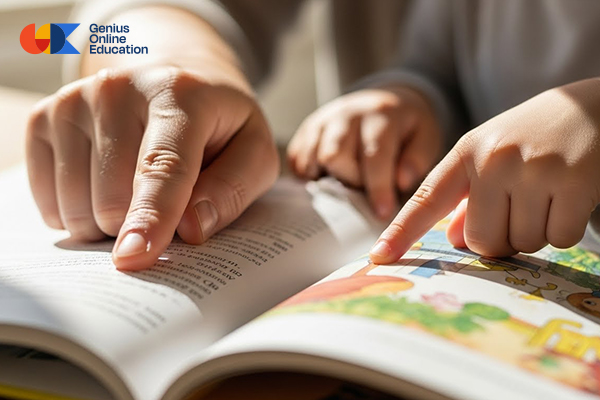
Teaching children to read requires gradual progression and patience, using simple methods that make learning enjoyable without pressure or boredom.
Step 1: Introducing letters
Start by teaching the shape and name of the letter, linking it with a familiar image or word.
Step 2: Learning letter sounds
Teaching the correct sound helps the child read correctly later, not just memorize the shape.
Step 3: Forming syllables
After mastering letters, combine them into simple syllables like: ba – bo – bi.
Step 4: Reading simple words
The child starts reading short words composed of easy syllables to build confidence and fluency.
Step 5: Forming short sentences
Encouraging reading short sentences helps the child understand and connect words.
Step 6: Daily regular reading
Short daily sessions are better than long and spaced sessions.
Step 7: Encouragement and repetition
Continuous encouragement and pressure-free repetition help the child progress steadily.
📖✨ Following these steps turns teaching children to read into a fun and fruitful journey.
Best Ways to Teach Children to Read at Home
Teaching children to read at home can be successful and enjoyable using simple methods suitable for the child’s age and abilities, with a supportive learning environment.
Relying on picture books
Colorful books attract the child’s attention and help link words to images and meanings.
Teaching through play
Educational games and cards allow children to learn reading indirectly.
Reading aloud with the child
Parents reading with the child enhances pronunciation and encourages imitation.
Breaking words into syllables
Teaching the child to divide words into syllables makes reading easier without complication.
Setting a fixed daily time
A daily routine helps the child develop reading habits.
Using interactive media
Educational videos and interactive apps increase focus and motivation.
Encouragement without rushing
Every child learns at their own pace, and encouragement matters more than speed.
Also explore: Tajweed Rules for Children
🏡📘 With these methods, the home becomes an ideal environment for teaching children to read with confidence and fun.
Teaching Children to Read from Age 4
Teaching reading from age 4 focuses on play and interaction more than rote learning, as children at this age are ready to explore letters and words in a fun and simple way.
Teaching letters using pictures and sounds
Use colorful cards and images linked to letters to facilitate learning and associate letters with their sounds.
Focusing on sounds, not memorization
Teaching letter sounds helps children read later easily without rote memorization.
Reading through short stories
Picture books encourage children to love reading and understand simple words.
Using educational songs
Songs help children remember letters and syllables in a fun way.
Short and repeated sessions
10 minutes daily is enough to maintain focus without boredom.
Encouragement without pressure
Continuous praise builds confidence and increases interest in learning.
🧒📖 Starting early creates a lifelong reader who loves books.
Teaching Reading in Fun Ways
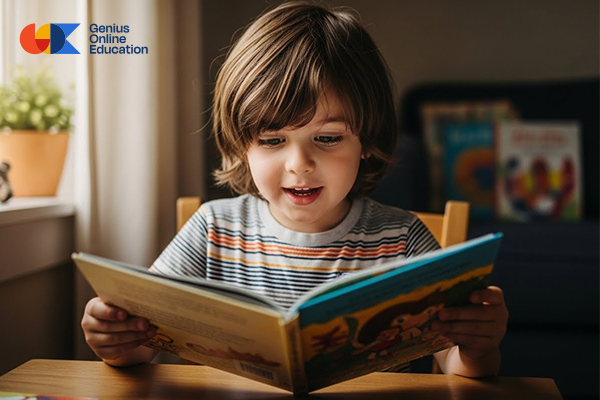
Teaching reading should not be boring or repetitive; it can be turned into an enjoyable activity that excites the child.
Learning through play
Educational games like letter cards and blocks help children learn without pressure.
Picture and colored storybooks
Images attract attention and help the child understand words and meanings.
Educational songs and rhymes
Songs facilitate memorizing letters and syllables, increasing learning enjoyment.
Role-playing and storytelling
Encouraging children to act out stories or read roles makes reading interactive.
Reading with parents
Parental involvement strengthens confidence and motivates attempts.
Encouragement and small rewards
Positive reinforcement, even with simple words, makes a big difference in love for reading.
🎨📖 When reading is combined with fun, learning becomes a daily joy for children.
Beginner Reading Program for Children
The beginner reading program with Genius Online offers a gradual path from letters and basic sounds to forming words and short sentences, in a fun and interactive way suitable for young children.
Learning letters and sounds in a fun way
The program starts with teaching each letter and sound, linking it with familiar pictures and words for easy memory and understanding.
Practical applications and interactive activities
Through educational games and exercises, children acquire reading skills in an enjoyable way that encourages continued learning.
Reading aloud and progress tracking
The program encourages reading words aloud, with continuous monitoring and support to boost confidence.
Encouraging and safe learning environment
The platform allows children to learn without fear of mistakes, with ongoing motivation for their individual skills.
Also explore: Children’s Tajweed Learning Program
📖✨ With Genius Online’s beginner reading program, your child begins their learning journey confidently and enjoyably from the first letters.
Stages of Teaching Children to Read
Teaching children to read is done gradually to ensure solid skill acquisition. Each stage builds on the previous to facilitate the transition from letters to fluent reading.
Stage 1: Recognizing letters
The child learns letter shapes, names, and links each letter to a familiar image or word for easy memorization.
Stage 2: Learning letter sounds
Focusing on correct pronunciation helps later in forming syllables and words correctly.
Stage 3: Forming syllables
Combine letters to create simple syllables like “ba – bo – bi” for easier reading later.
Stage 4: Reading simple words
Encourage reading short words made of easy syllables to build confidence.
Stage 5: Forming short sentences
Move to reading short sentences to develop understanding and word connection.
Stage 6: Daily reading and repetition
Daily short reading sessions enhance skills and make learning a habit.
Stage 7: Progressing to fluency
After mastering short sentences, the child reads simple texts independently and fluently.
📖🌟 Following these stages makes teaching children to read smooth and effective, creating a confident, reading-loving child.
Reading Difficulties in Children
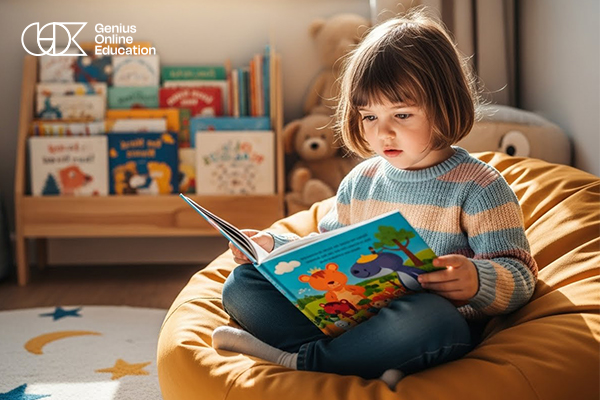
Some children may face challenges while learning to read, which are often normal and can be addressed with patience and proper training. Identifying these difficulties helps parents and teachers provide the right support.
Difficulty distinguishing letters
Children may confuse similar letters like “b” and “t” or “s” and “sh”, requiring repetition and visual and auditory exercises.
Poor visual memory
Inability to remember letter and word shapes affects reading speed, which can be improved using picture cards and educational games.
Pronunciation problems
Some children struggle with letter or syllable sounds, slowing reading progress and requiring continuous speech training.
Difficulty understanding words and sentences
Children may read words correctly but not understand them, so reading should be linked to pictures and interactive activities.
Loss of focus while reading
Low attention leads to forgetting syllables or words, which can be improved with short and frequent sessions.
Fear of mistakes or frustration
Pressure or comparison may discourage the child; continuous encouragement is essential.
📚✨ Early recognition of reading difficulties helps provide appropriate support and turn challenges into successes.
Common Mistakes in Teaching Children to Read
Parents and teachers may make mistakes that affect a child’s learning speed or cause boredom or frustration. Recognizing these mistakes helps avoid them and achieve better results.
Pressuring the child to learn quickly
Forcing the child to learn letters and words too fast creates tension and reduces motivation.
Ignoring sounds when teaching letters
Focusing on letter shapes without correct pronunciation hinders later word formation.
Boring repetition without interaction
Repetition alone without games or interactive activities makes learning dull.
Comparing the child to peers
Every child learns at their own pace; comparison causes frustration and fear of mistakes.
Neglecting progress monitoring
Lack of evaluation prevents early detection of difficulties and makes intervention harder.
Using overly difficult texts
Challenging texts beyond the child’s ability can frustrate and reduce motivation.
Neglecting encouragement
Not praising or rewarding small achievements diminishes confidence and love for reading.
📖✨ By avoiding these mistakes, teaching children to read becomes more effective and enjoyable, creating a confident and motivated learner.
Tips for Overcoming Reading Difficulties
Learning to read can be challenging for some children, but with patience and proper methods, difficulties can be overcome effectively and enjoyably.
Start slowly with the basics
Focus on letters and their sounds first before moving on to words and sentences, to build a solid foundation.
Use visual and auditory aids
Picture cards, interactive games, and educational songs help link letters, sounds, and words.
Break words into syllables
Teaching the child to divide words into syllables facilitates reading and understanding gradually.
Read aloud
Encourage the child to read aloud, and join in to correct pronunciation and boost confidence.
Short and repeated sessions
Daily 10–15 minute sessions are better than long ones to maintain attention and motivation.
Encourage trial and error
Teach that mistakes are natural, and repetition improves skill and reinforces reading.
Continuous monitoring and assessment
Regularly track progress, identify areas needing extra practice, and celebrate small successes.
Link reading with fun
Use picture books, games, and songs to make learning enjoyable and fun.
📚✨ Following these tips, children can overcome reading difficulties with confidence and enjoyment, becoming skilled readers from an early age.